The Mystery Circles of the Sea: Amami Oshima’s White-Spotted Pufferfish

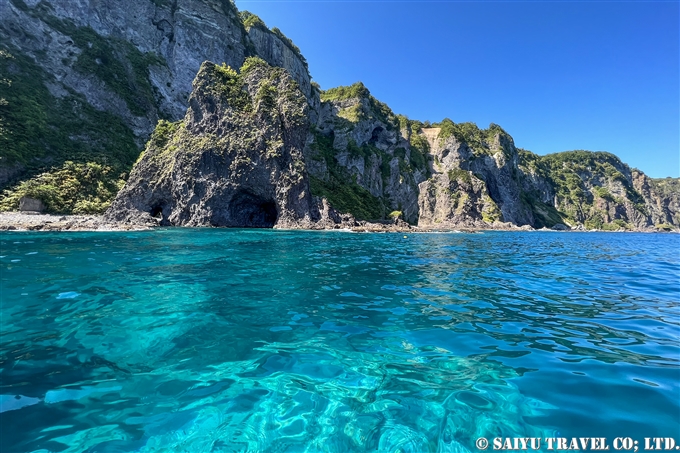
Discover the Magic of Amami Oshima’s Sea Amami Oshima,  a UNESCO World Natural Heritage site, is a diver’s paradise. In the southern part of the island lies Setouchi Town, where the Oshima Strait—nestled between the main island and Kakeroma Island—offers breathtaking views of its rias coastline and crystal-clear waters.
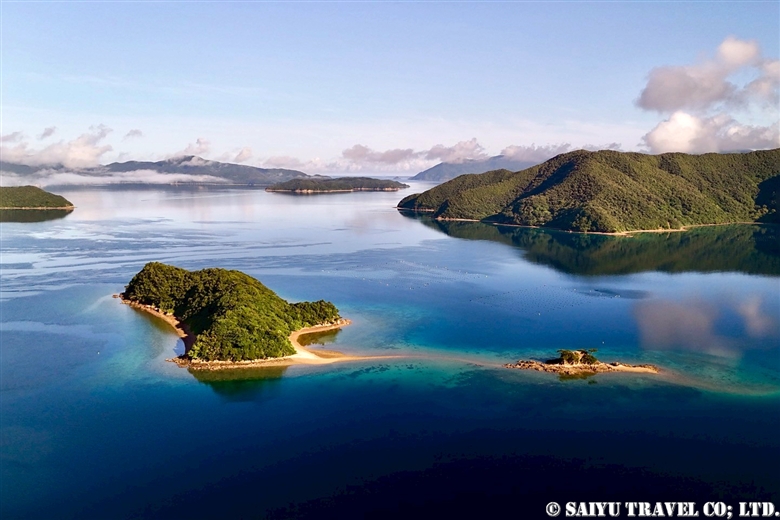
Views of the Oshima Strait (Aerial drone shot by AquaDive Kohollo)

↓↓ Watch: How the White-Spotted Pufferfish creates its Mystery Circle

↓↓ A chance to swim with Indo-Pacific bottlenose dolphins in the Oshima Strait!

The Mystery of the Deep

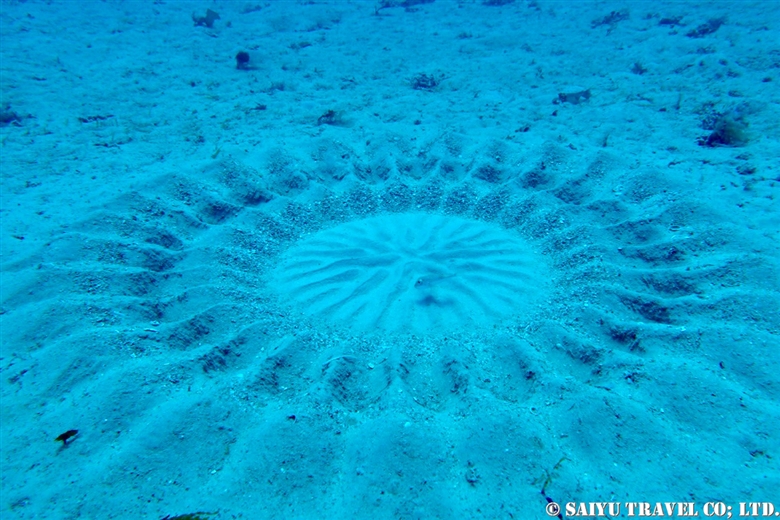
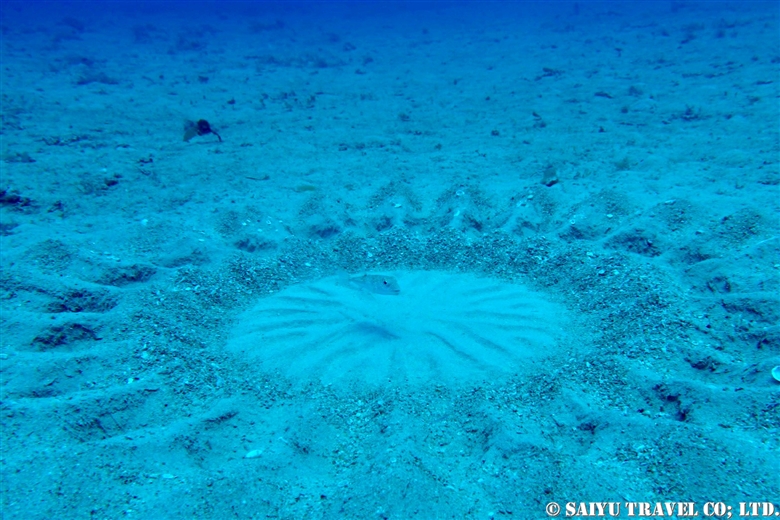
Since around 1995, mysterious geometric patterns, about 2 meters in diameter, were discovered on the sandy seabed of Amami. These became known as “Mystery Circles,” and for 16 years, no one knew who created them.
The ‘Mystery Circles’ of the seabed that remained a puzzle for many years

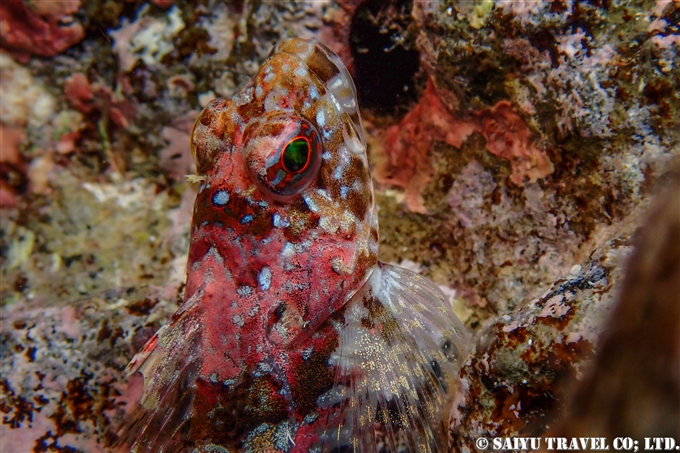
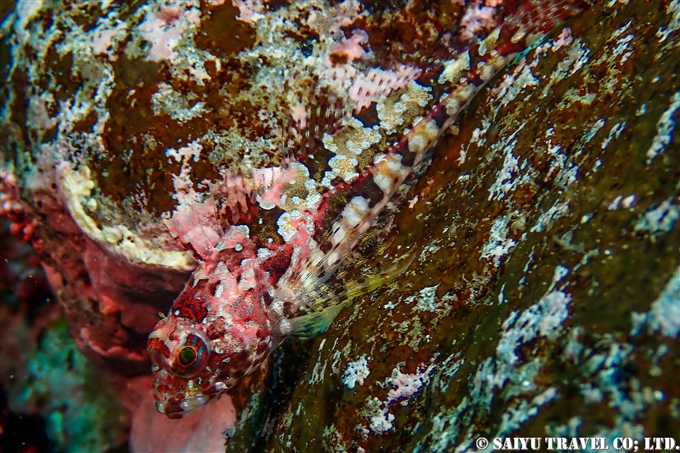
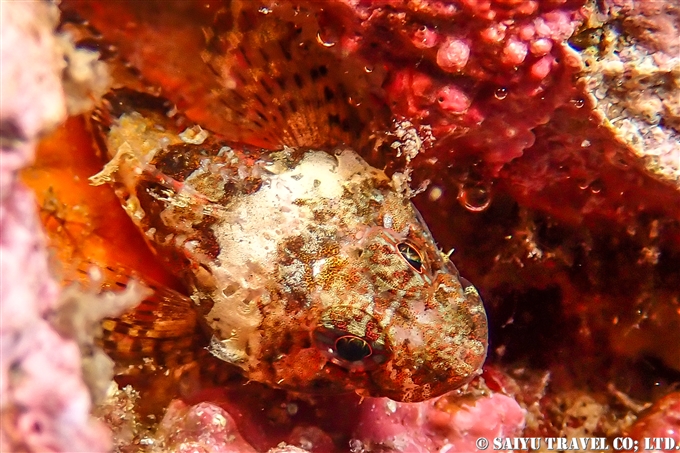
It wasn’t until 2011 that underwater photographer Yoji Okata finally caught the artist on camera: a tiny pufferfish! In 2014, it was officially named the White-Spotted Pufferfish (Japanese name: Amami-no-Hoshizora-Fugu).

Later, it was discovered that these pufferfish live not only in the southern part of Amami Oshima, but also along the northeastern coast of Kakeroma Island and in the sandy depths of Kasari Bay in the north, at around 30 meters deep.
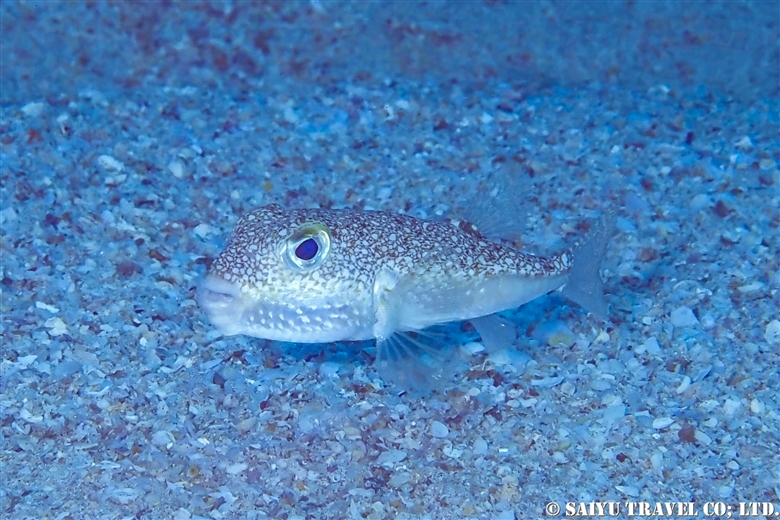
Japanese name : Amami-no-Hoshizora-Fugu アマミノホシゾラフグ

The name Hoshizora means “Starry Sky.” It comes from the beautiful white spots on the pufferfish’s back, which look just like the glittering stars in the clear night sky over Amami Oshima.

These Mystery Circles are actually spawning nests built by the males. Despite being only 10-15cm long, the male spends 7 to 9 days working without rest to dig grooves and create ridges using its fins. The more perfect the circle, the more likely he is to attract a mate!

When a female arrives, a unique ritual begins: the male gently bites the female’s cheek. This stimulates her to lay eggs and keeps her steady in the center of the nest. Once the eggs are laid, the devoted father stays for about a week to protect them and fan them with fresh seawater until they hatch.

Observing the Pufferfish (Photography by AquaDive Kohollo)

On our diving tours, you can observe the entire process, starting from the circle-making itself. If you’re lucky, you might even witness a female arriving or a male devotedly caring for the eggs. However, please note that these mystery circles are usually found at depths of around 30 meters, making observations difficult if they are located any deeper.

When observing, we take great care not to disturb the pufferfish or kick up any sand. While using a strobe is currently permitted, there may be restrictions on the use of continuous lights. Please be sure to follow the specific rules set by local diving association.

More to Explore

The Oshima Strait is a treasure trove of marine life. Beyond the pufferfish, you might even have the chance to swim with Indo-Pacific bottlenose dolphins! You can also find rare creatures like the Sutsubo-sando-yadokari (a hermit crab discovered in 2017) and the colorful Boxer Crab.

This hermit crab, called Sutsubo-sando-yadokari, was only just described as a new species in 2017. What makes it truly unique is that it carries and walks around in a ‘living coral’ instead of a shell.
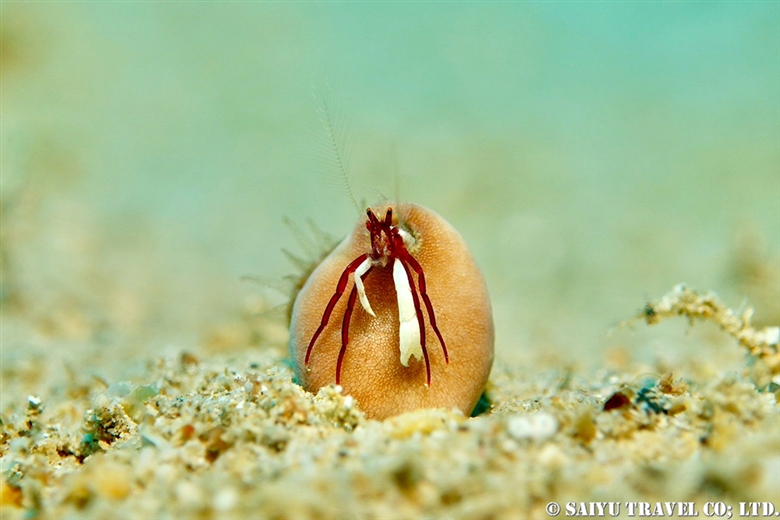
Sutsubo-sando-yadokari (a hermit crab discovered in 2017) (Photography by AquaDive Kohollo)

It is a tiny hermit crab, characterized by its vibrant red legs and white claws peeking out from the coral.
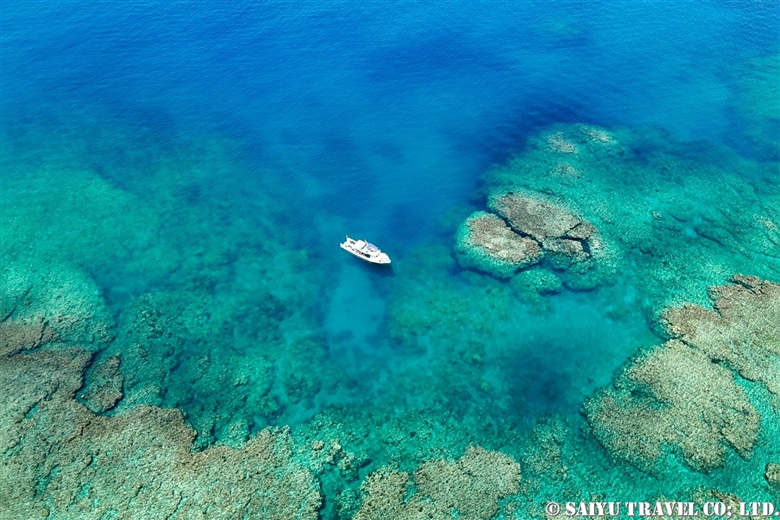
The beautiful waters of the Oshima Strait in southern Amami Oshima (Aerial drone shot by AquaDive Kohollo)
A lucky find: The adorable Boxer Crab
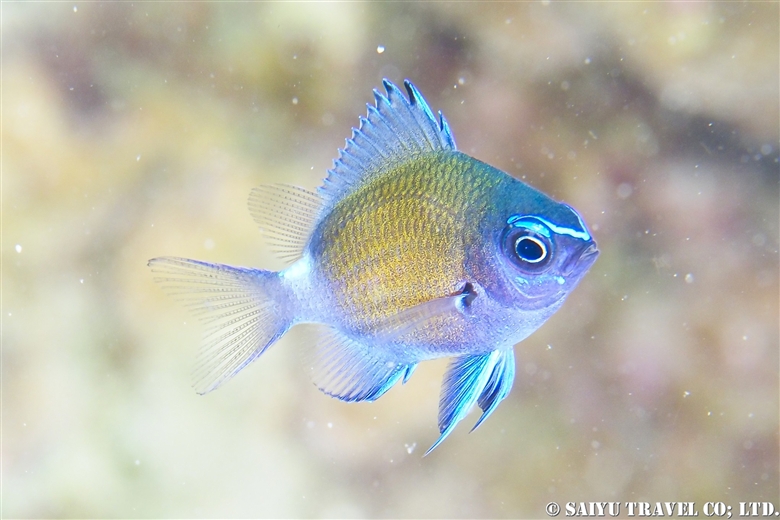
Young Amami Damselfish
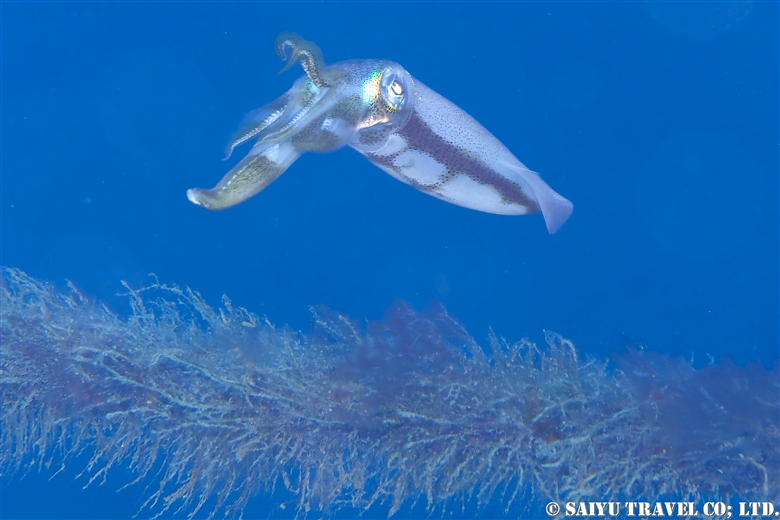
A juvenile Bigfin Reef Squid approaching the boat
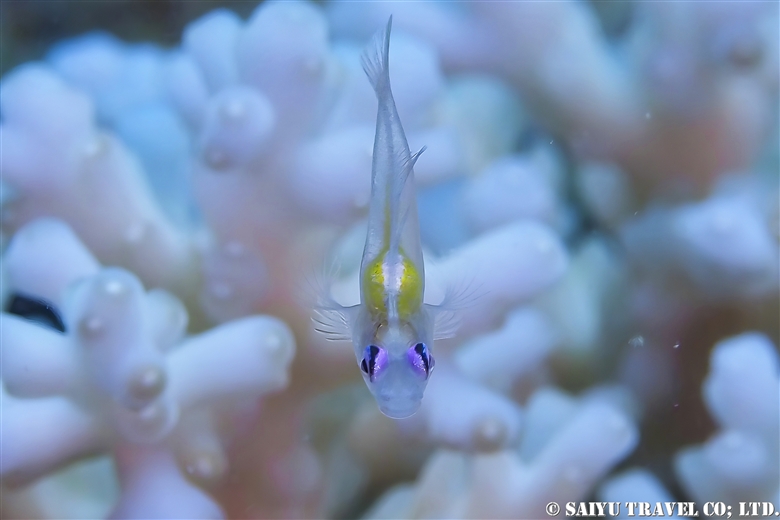
Red-eye Goby
Surrounded by a fun-loving diving team (Photography by AquaDive Kohollo)

If you’re looking for a diving experience filled with wonder and natural art, come and see the Mystery Circles of Amami Oshima!


Image : Mariko SAWADA,  AquaDive Kohollo

Text : Mariko SAWADA

Location : Amami Oshima


■Related Articles: Amami Oshima

Scuba Diving Amami Oshima

The White-Spotted Pufferfish Circle Formation(Amami Oshima)

(Video) Humpback Whale Watching & Swim in Amami Oshima

Mother and Calf Humpback Whales (Amami Oshima)

■Please contact us for inquiries regarding diving and whale swim tours (Humpback & Sperm whales) in Amami Oshima

■Wildlife videos are also available on Youtube

■Follow us on Instagram

Tags: , , , , , , , , , ,

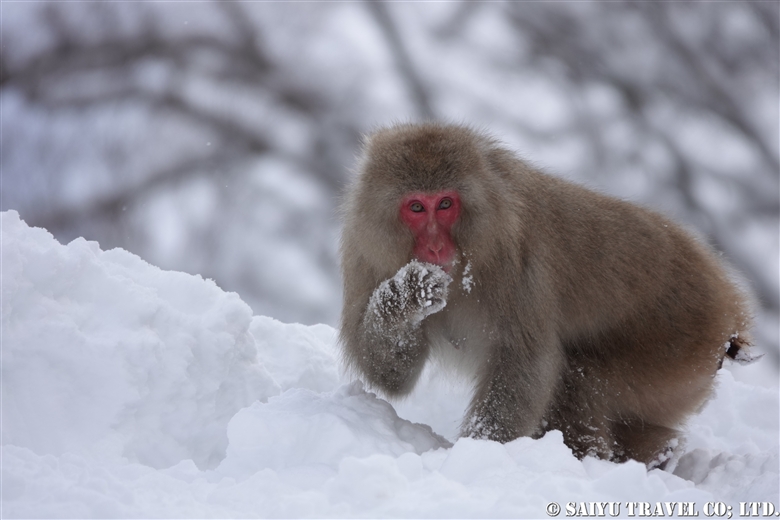
Nagano’s Famous Snow Monkeys – The Japanese Macaques of Jigokudani

After World War II, the mountains around Jigokudani, where Japanese macaques reside, were seriously affected by the then-developing forestry industry. This deforestation robbed monkeys of their natural habitat and caused them to travel down to nearby villages, where they wrought damage on local apple farms. Fearing that this would lead to the monkeys being exterminated, Shogo Hara, the first director of Jigokudani-Yaen-Koen, came up with a plan. He started feeding these displaced monkeys in an area deep within the mountains, away from the apple farms. He believed that, if they could just find enough food to eat in the mountains, the monkeys would not resort to ransacking farms. Although it took three years to get the highly cautious Japanese macaques used to being fed by humans, Mr. Hara’s efforts eventually delivered reliable results, and in 1964, Jigokudani-Yaen-Koen officially opened its gates.

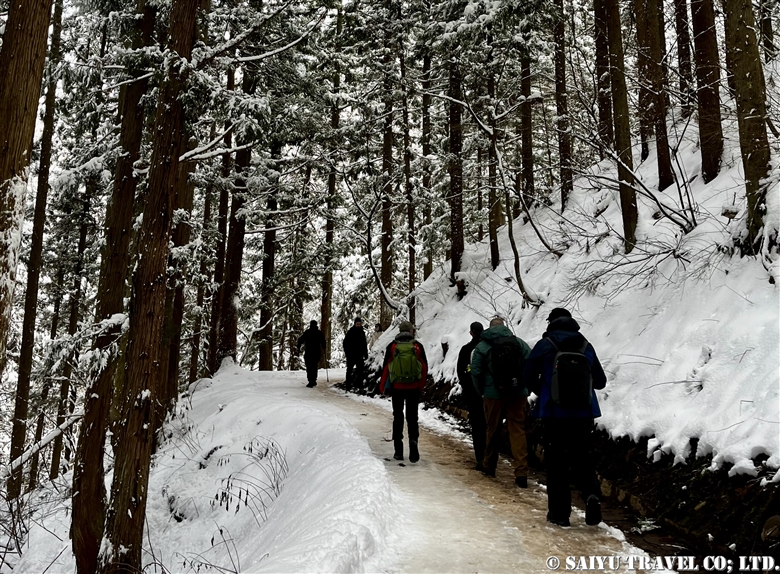
During the snowy winter months when it is difficult for them to find food in the mountains, many Japanese macaques opt to gather at this park. The hike up to the monkeys requires that visitors trek for approximately 30 minutes on a snowy trail—the distance is understandable, given the original point of feeding them there was to keep them far away from human settlements. Crampons or snow spikes are essential equipment to have here, as the hiking trail is quite icy and slippery.

The hiking trail leading to Snow Monkey Park
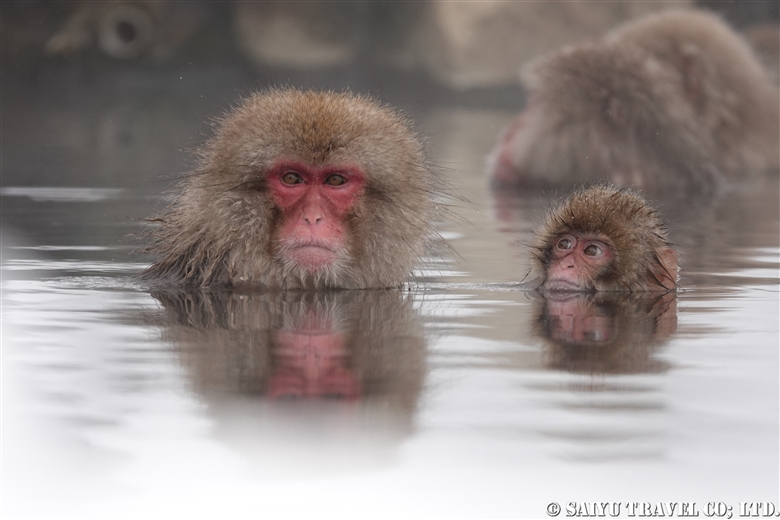
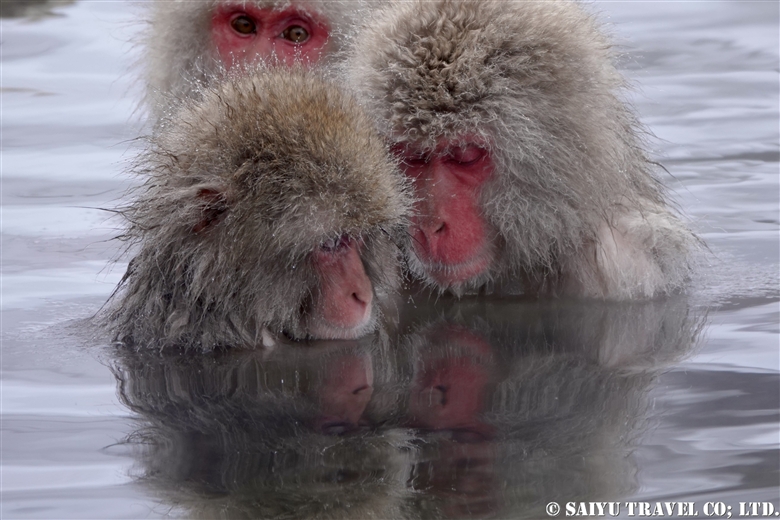
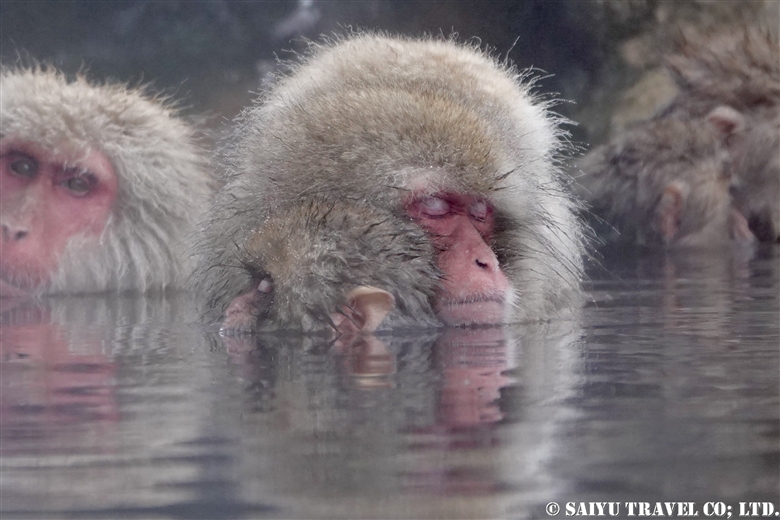
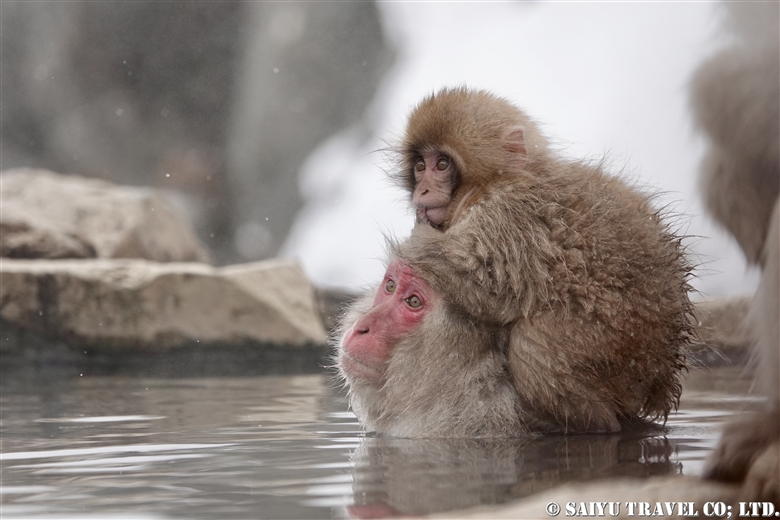
Japanese macaques soaking in a hot spring bathtub
Japanese macaques soaking in a hot spring bathtub, looking thoroughly pleased.
Japanese macaques

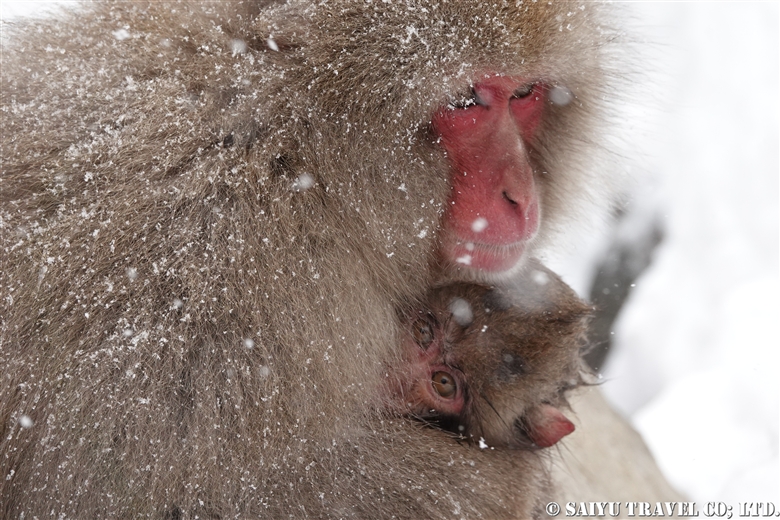
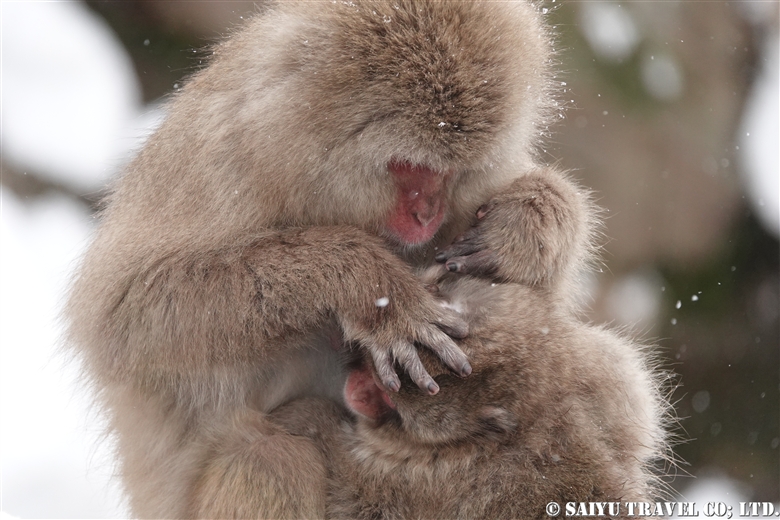
Japanese macaques give birth from late April to June, meaning that in January and February, it’s possible to glimpse many baby macaques experiencing their first-ever winter. These young monkeys are brimming with curiosity and are constantly active and full of energy. No matter how long you stare at these cuties, you’ll never get tired of them. Getting to see a mother monkey holding her child firmly in her arms to protect them from the cold is also a very striking image that’s sure to stay with you.

A mother and child showing each other love and affection
A mother and child
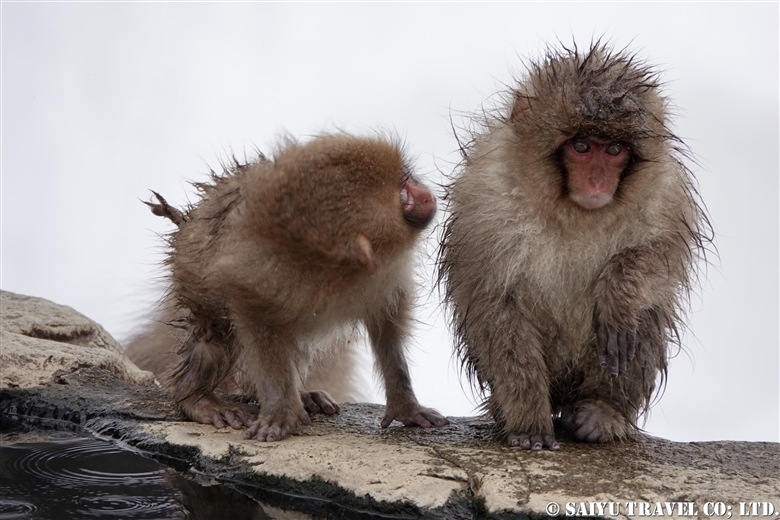
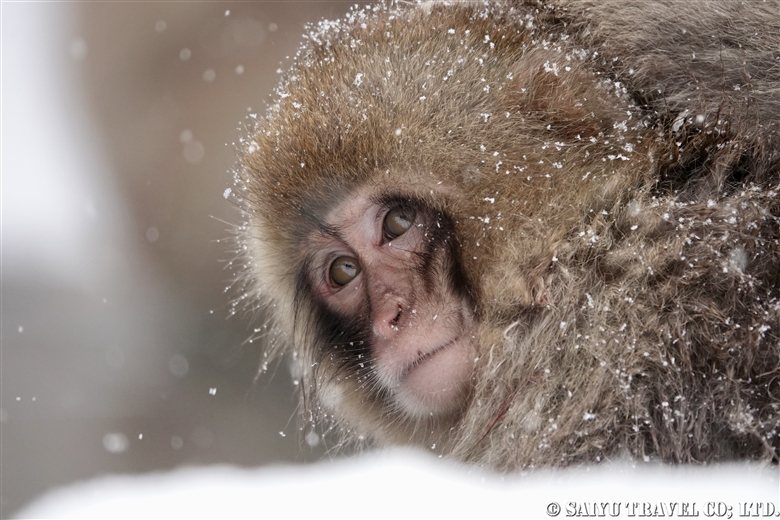
Young monkeys being their curious selves
A young monkey

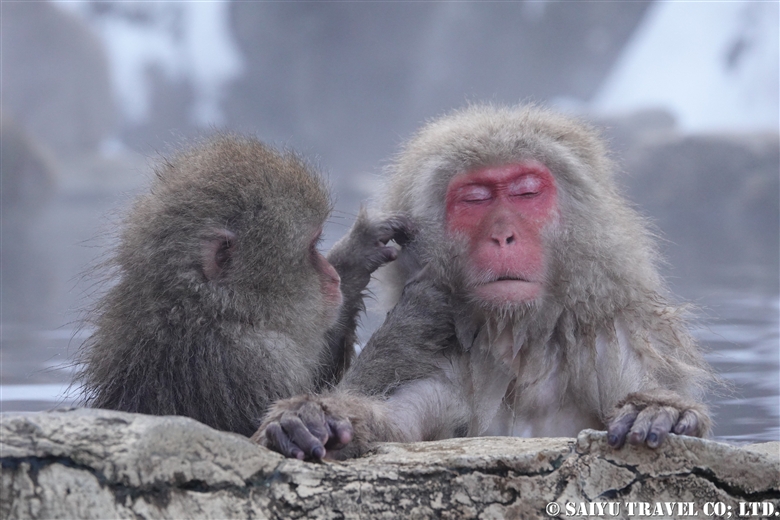
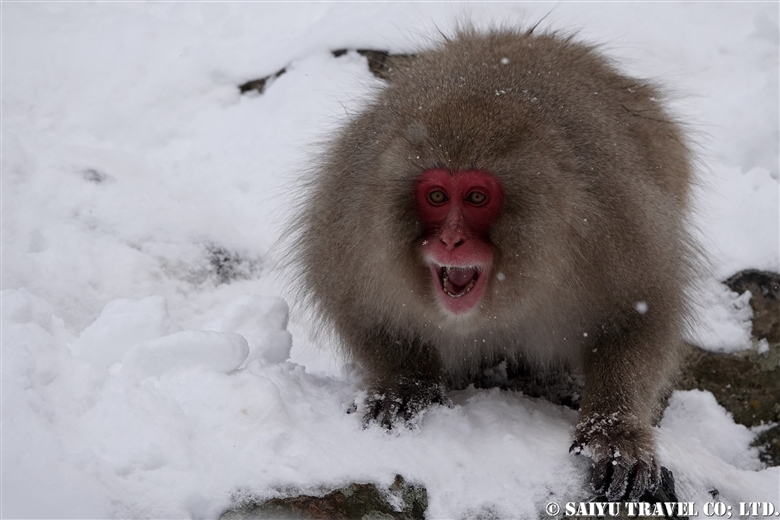
There’s more to this park’s monkeys than just bathing in hot springs. Whether it be on the mountain slopes or by the riverside running through the park, you can spot many Japanese macaques here doing what they do best: grooming their fur, searching for food in the snow, and sometimes even fighting over said food. One of the things that makes the park so unique is precisely that the monkeys are used to being around humans. This means they can be observed and photographed at very close range—though it is important to abide by the park rules, which state that it is forbidden to approach within 1 meter of them.

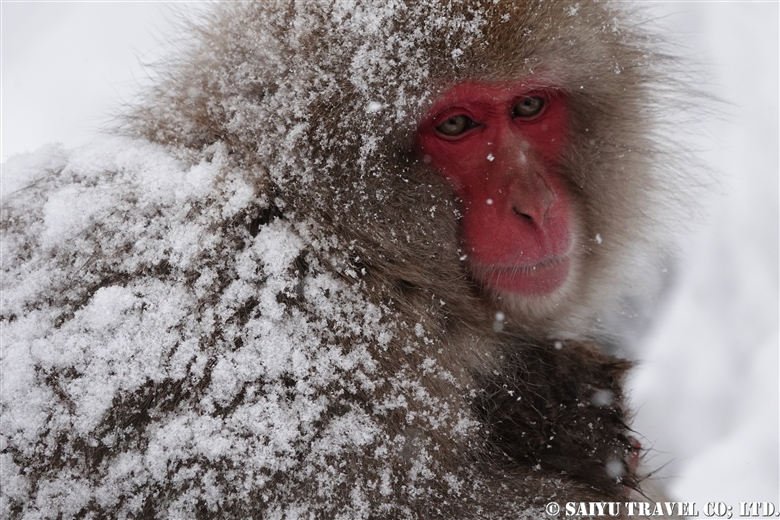
The many different sides and faces of the Japanese Macaque
Japanese Macaque
Japanese Macaque
Japanese Macaque

The first time Jigokudani-Yaen-Koen attracted the world’s attention was in 1970, when it was featured in LIFE magazine in the United States. After that, during the Nagano Winter Olympics held in 1998, media outlets from many countries reported on the existence of these snow monkeys, which led to this park becoming known all over the world. Nowadays, a wide variety of people—running the gamut from families and couples to ordinary tourists and serious photographers—visit this wonderful Nagano village. They return home with a wonderful experience and share it with others, continuing to spread the word about the wonders of Jigokudani to the whole world.


Photo & Text : Kengo Yonetani

Observation : Feb 2025, Jigokudani-Onsen, Nagano, Japan
Contact us to make arrangements for photographing Snow Monkey and Wildlife of Japan.

★Wildlife videos are also available on Youtube – we have the playlist as well.

Tags: , , , , , , , , , , ,

Okinawa Herping in the Rainy Season : in search for three species of ground geckos

We embarked on a herping expedition in rainy-season Okinawa. The main objective was to search for three species of ground geckos (Goniurosaurus sp.) in three locations: Yanbaru National Park on northern Okinawa Main Island, southern Okinawa Main Island, and Iheya Island.

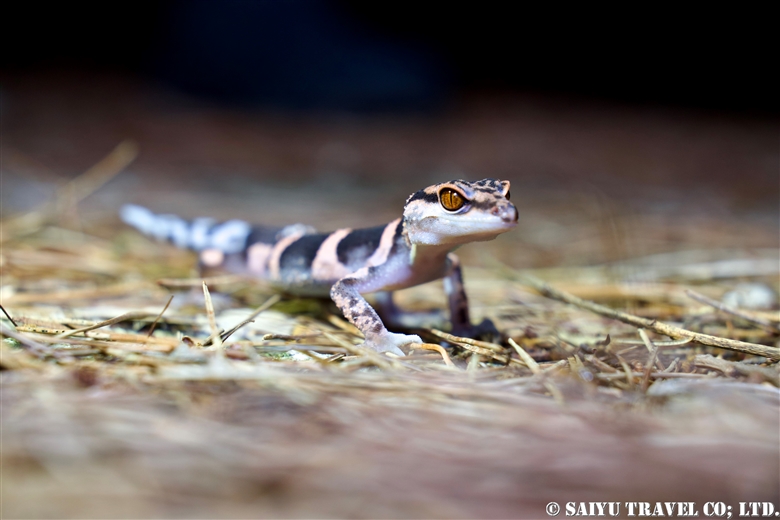
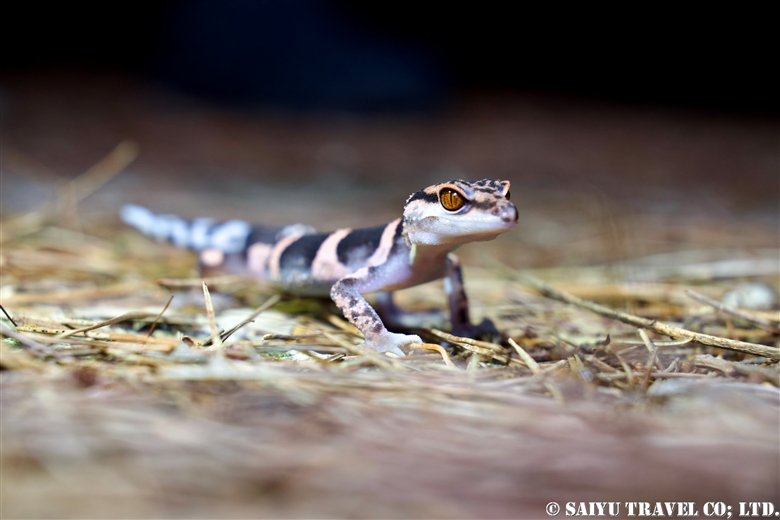
The first destination was the southern part of Okinawa Main Island. This area is characterized by a landscape dominated by uplifted limestone formations from ancient coral reefs. It’s a significant spot where the Japanese ground gecko (Goniurosaurus kuroiwae) can be photographed against a backdrop of limestone.

Japanese ground gecko (Goniurosaurus kuroiwae)

Blessed with favorable weather, we observed over 20 specimens. The Japanese ground gecko is distinguished by a continuous pattern running from the neck to the tail, against its back.

Japanese ground gecko (Goniurosaurus kuroiwae)

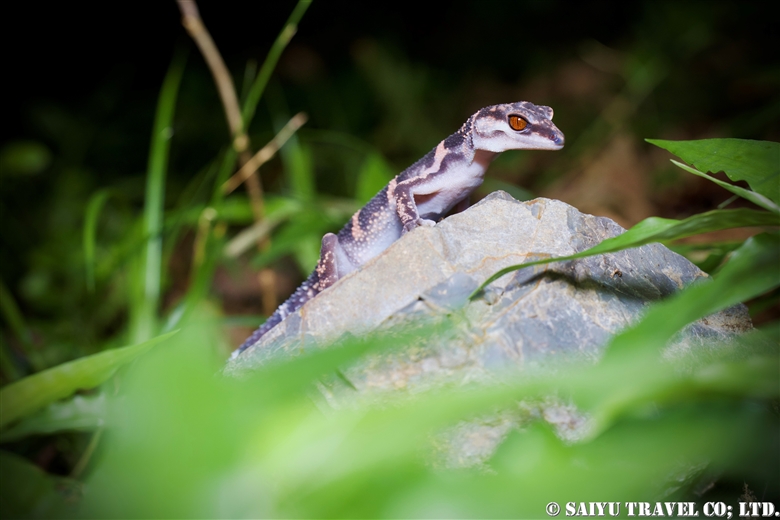
On the second day, we traveled to Iheya Island, the northernmost island in Okinawa Prefecture. I set out in search of the most challenging to observe among Japanese ground geckos, the Iheya ground gecko (Goniurosaurus toyamai).

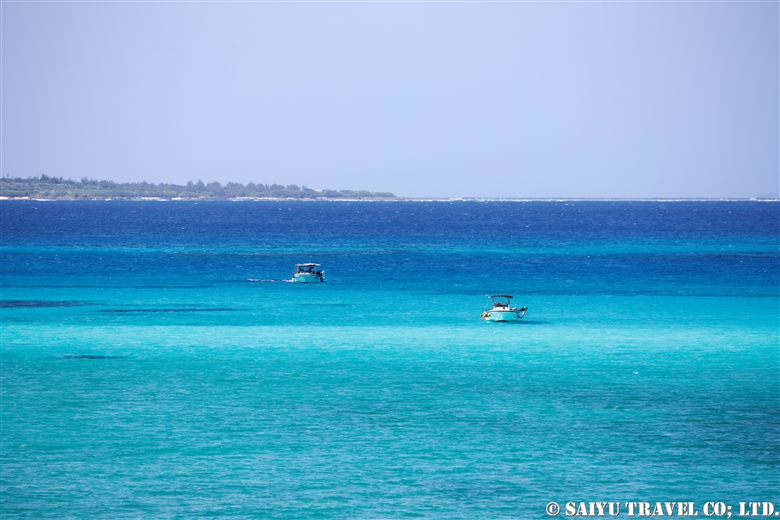
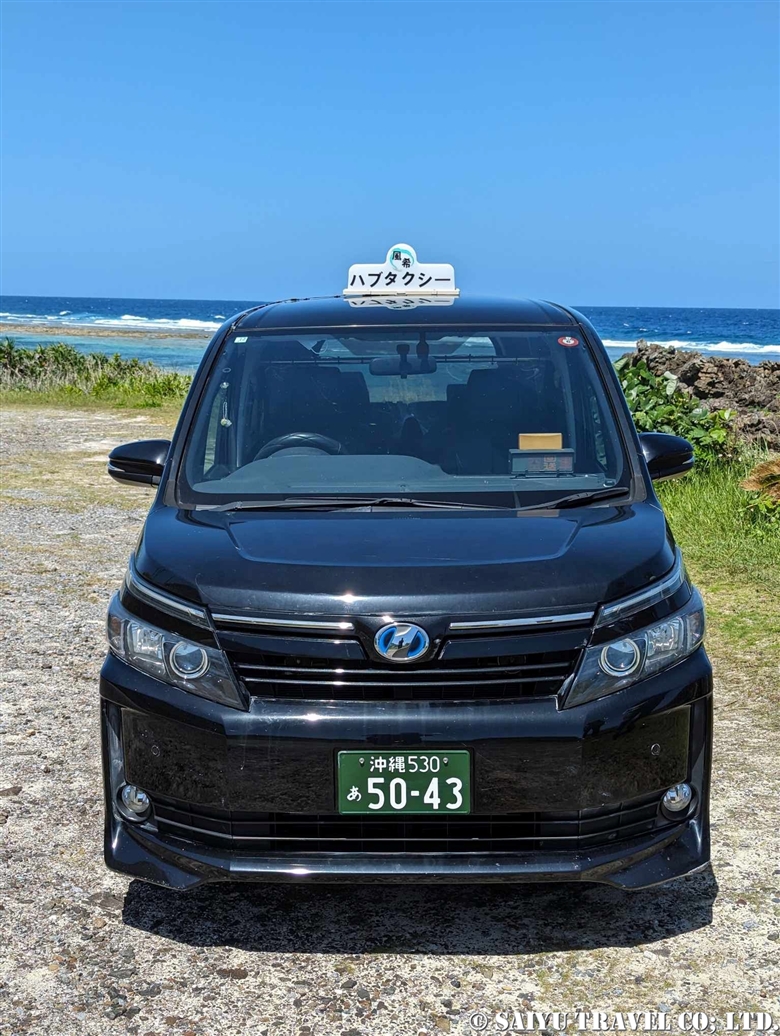
Upon arrival by ferry, we were greeted by the island’s beautiful sea and its sole taxi service, Habu Taxi (Habu being a species of viper), for our journey.

Iheya island’s beautiful sea
Iheya island’s sole taxi service, Habu Taxi

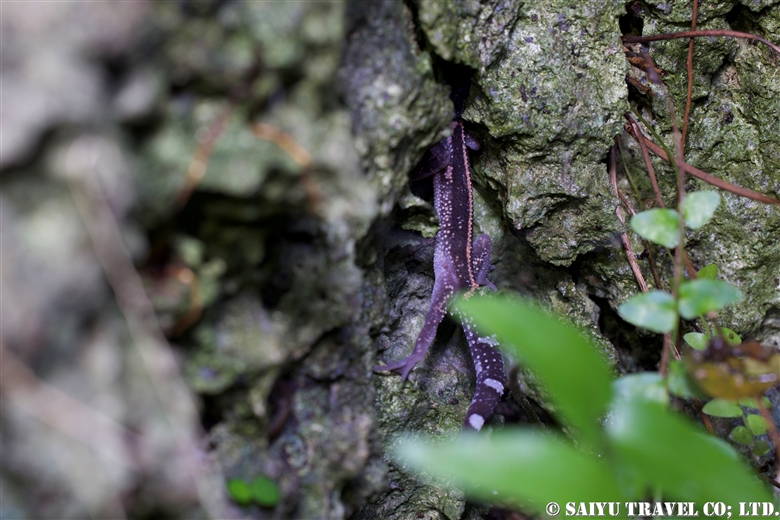
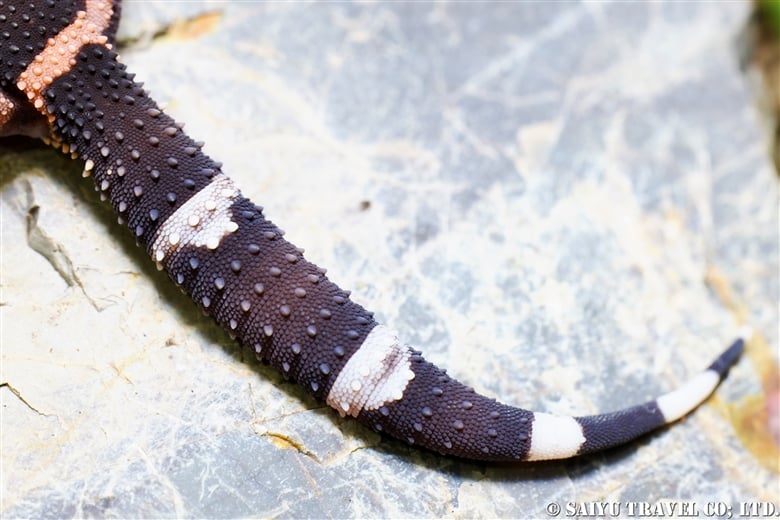
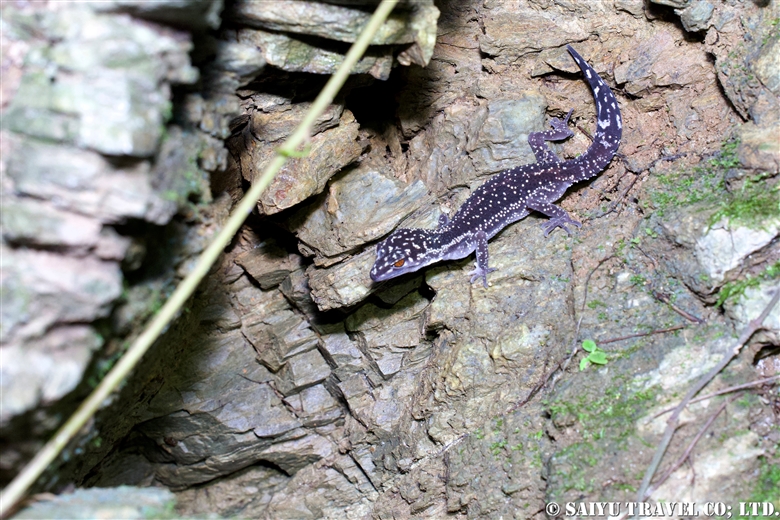
Shortly after dusk, the elusive Iheya ground gecko appeared. Its distinct band pattern and light pinkish body coloration were remarkable. It was a large (equivalent to the length of the palm of one’s hand) and stunning specimen, particularly due to its intact tail—something which is rarely found in nature.

Iheya ground gecko  (Goniurosaurus toyamai)

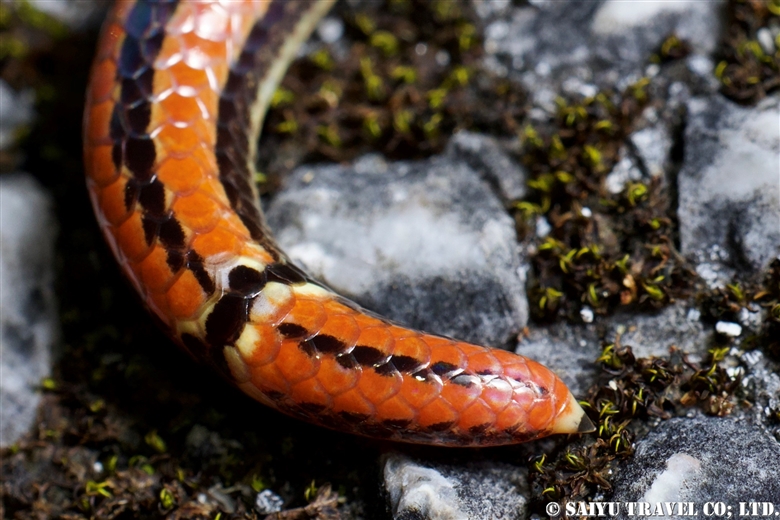
Subsequently, I successfully observed one of Okinawa’s rarest snakes, the Hai coral snake (Sinomicrurus japonicus boettgeri). Although there are no records of human bites to date, we had to be careful while observing these snakes because they are highly venomous members of the cobra family.

Hai Coral Snake (Sinomicrurus japonicus boettgeri)

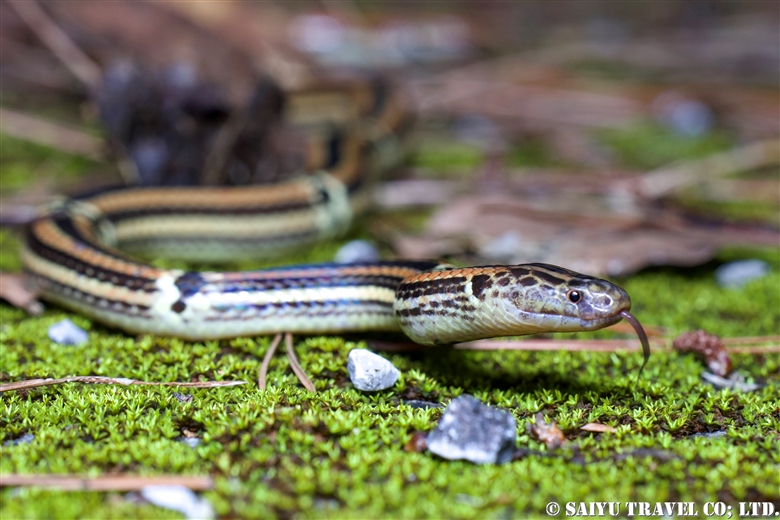
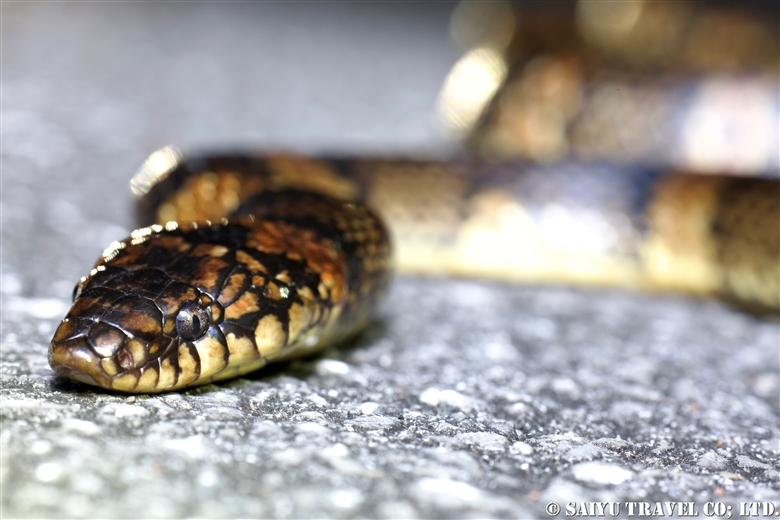
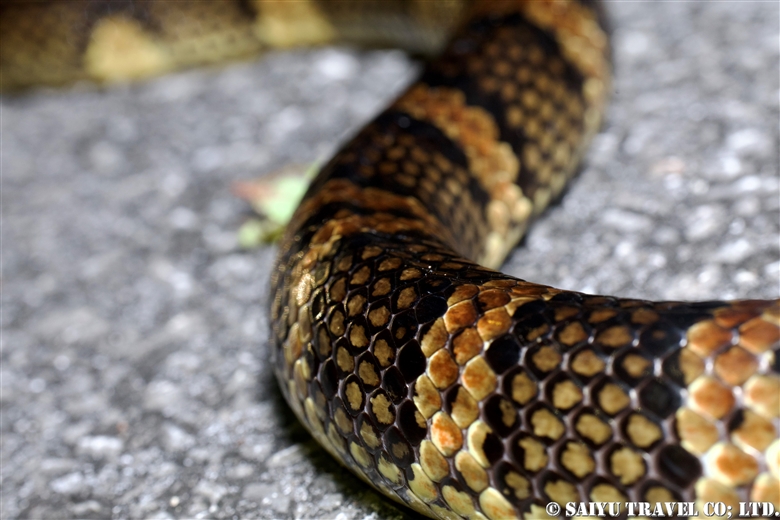
One of the most intriguing encounters was with the Ryukyu odd-tooth snake (Lycodon semicarinatus). I observed a total of three of them that day, noting their darker, more chic coloration compared to their counterparts on Okinawa Main Island. Typically, this species on Okinawa Main Island darkens as they grow larger, but the specimens on Iheya Island exhibited darker hues even at smaller sizes, hinting at possible new species awaiting discovery through further research on this less-visited island.

Ryukyu odd-tooth snake  (Lycodon semicarinatus)

After encountering another Iheya ground gecko and successfully observing a habu the following morning, our Iheya herping adventure concluded with great satisfaction.

Iheya ground gecko  (Goniurosaurus toyamai)
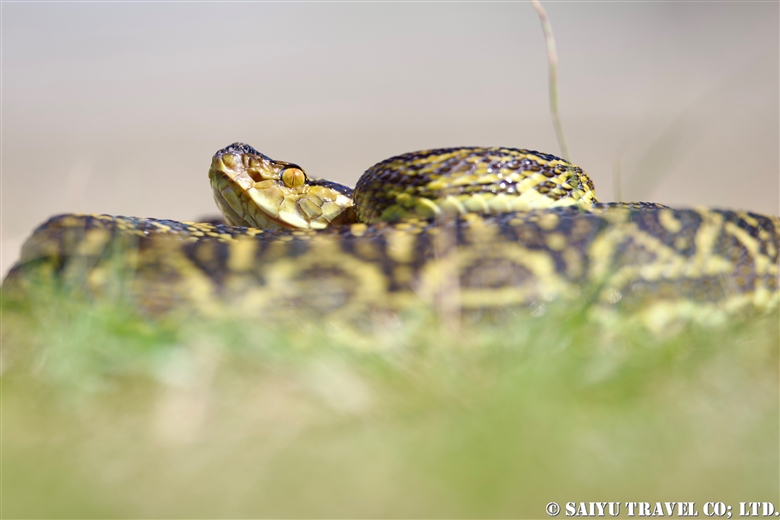
Habu (Protobothrops flavoviridis)

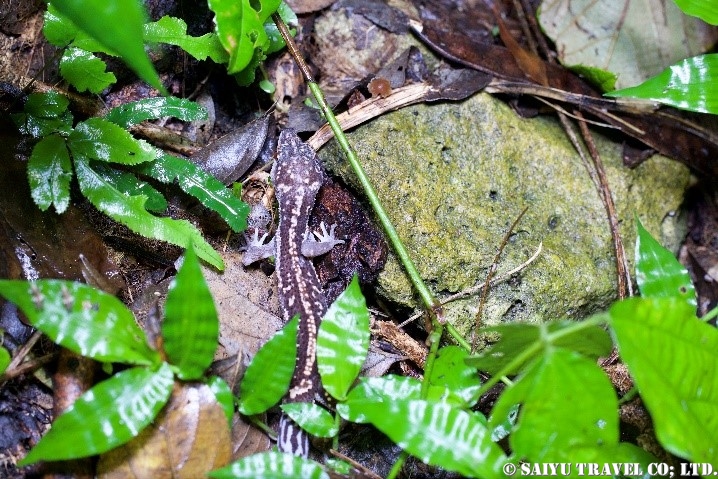
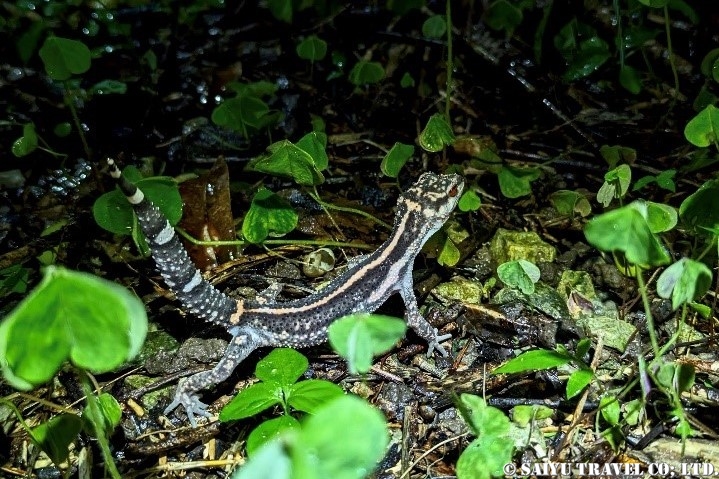
For the final day, we headed to Yanbaru National Park on northern Okinawa Main Island. Here, the primary goal was to observe the recently registered new species in 2024, the Yambaru ground gecko (Goniurosaurus nebulozonatus).

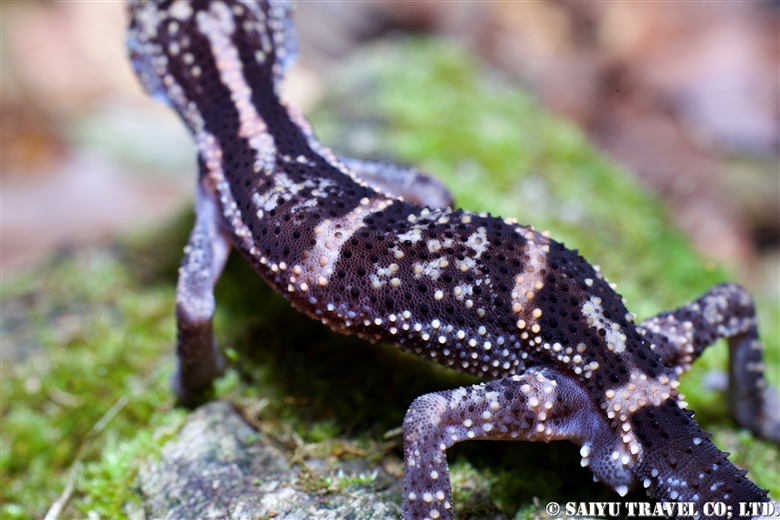
The Yambaru ground gecko is distinguished by interrupted dorsal patterns. Among the specimens observed, some showed patterns which were almost connected, clearly distinguishing them from the previously categorized Japanese ground geckos found on southern Okinawa Main Island.

Yambaru ground-gecko  (Goniurosaurus nebulozonatus)

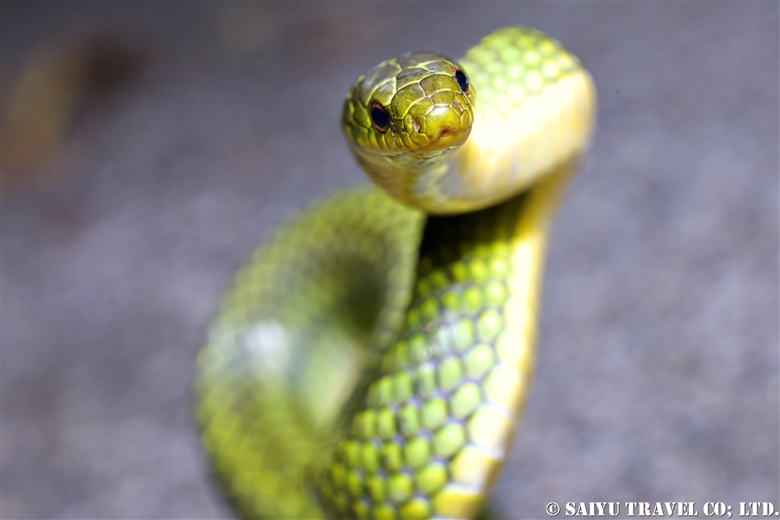
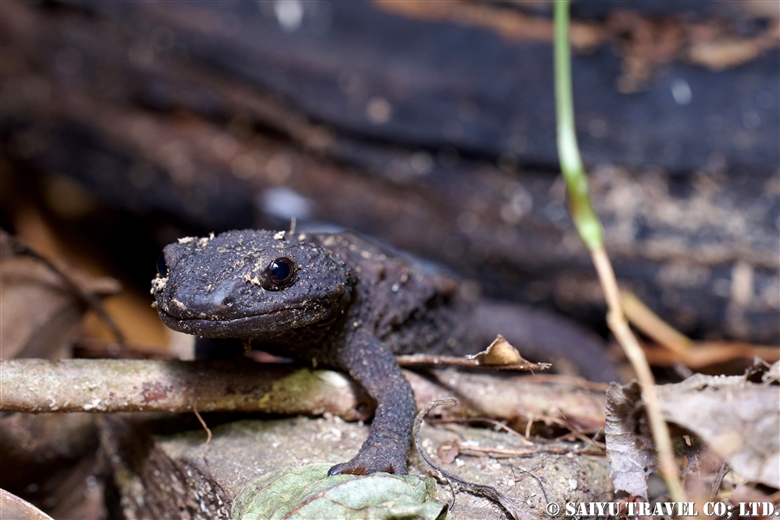
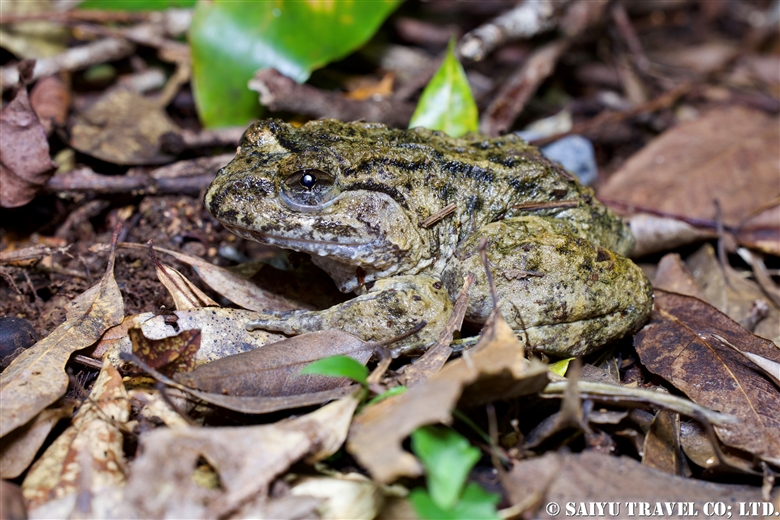
Herping in Yanbaru National Park is appealing not only due to the variety of creatures one can observe but also because of the richness of biodiversity. In addition to geckos, we successfully observed Ryukyu green snakes (Cycophiops semicarinatus), Anderson’s crocodile newt (Echinotriton andersoni), and Namiye’s frog (Limnonectes namiyei), culminating in a highly satisfying herping experience.

Ryukyu green snakes (Cycophiops semicarinatus)
Anderson’s crocodile newt (Echinotriton andersoni )
Namiye’s frog (Limnonectes namiyei)
Okinawa pitviper (Ovophis okinavensis)

The Okinawa Islands are a hotspot for herps, each island harboring unique endemic species. I encourage every herper to venture out for a herping experience here.


Photo &Text : Wataru HIMENO

Observation : May 2024, Okinawa Islands

Photo & text : Wataru HIMENO(  Instagram “Herping Tonight” )

Please contact us,  Saiyu Travel Japan  for Herping in Japan.
Please check our latest activity : Instagram,  FacebookYoutube

Tags: , , , , , , , , , , , , , ,

Ochishi and Kiritappu in Early Summer

In early summer, seabirds in breeding plumage and sea animals can be seen on the Ochishi cruise and at Cape Kiritappu, and beautiful flowers and grasses can also be found in the marshlands along the way.

Ochiishi Cruise and Surrounding Waters

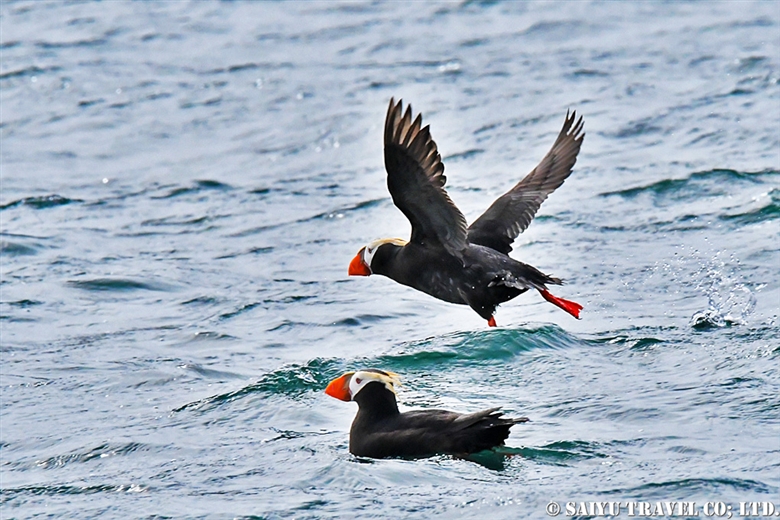
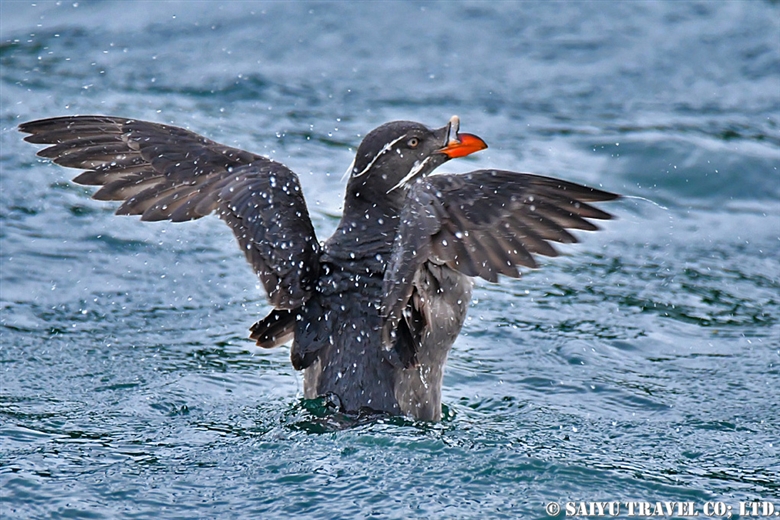
From Cape Nosappu to Cape Erimo, part of the cold Oyashio (Kuril) Current flows along the coast, especially from Nemuro to Cape Kiritappu, which is the area with the lowest sea water temperature in Japan. As a result, tufted puffins, red-faced cormorants, and other seabirds that are difficult to see outside of this area breed here. The uninhabited islands of Yururi Island and Moyururi Island in Ochiishi are especially important breeding grounds for seabirds, and both landing on the islands and fishing in the surrounding area are prohibited. Currently, seabird observation by permitted fishing boats is operated in some areas.

To visit the waters of Yururi Island and Moyururi Island, you must take a Ochiishi cruise operated by the fishing association. The cruise takes about 2.5 hours on a local fishing boat and involves observing birds in the surrounding waters. Since this is a fishing boat, the cruise can be quite bumpy and subject to waves depending on the weather, so please make preparations to deal with seasickness, assure your belongings are adequately waterproofed, and bring warm clothes.

The following is a list of seabirds and marine animals that can be seen.

Rhinoceros Auklet
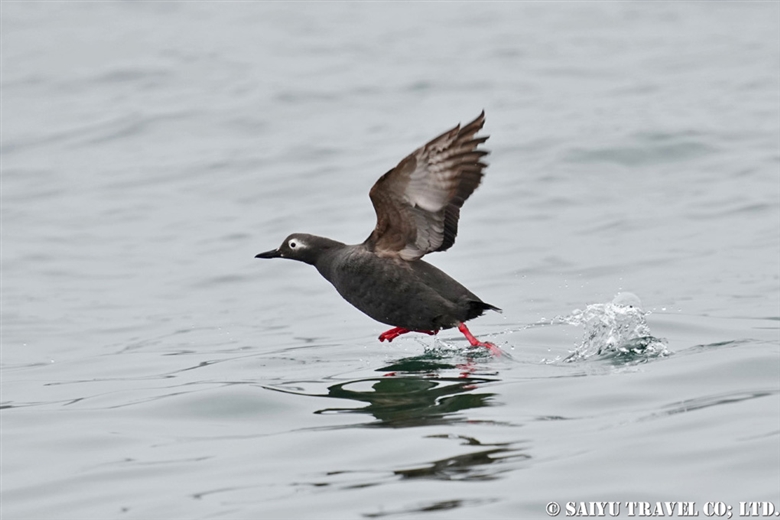
Spectacled Guillemot
Pigeon Guillemot
Tufted Puffin
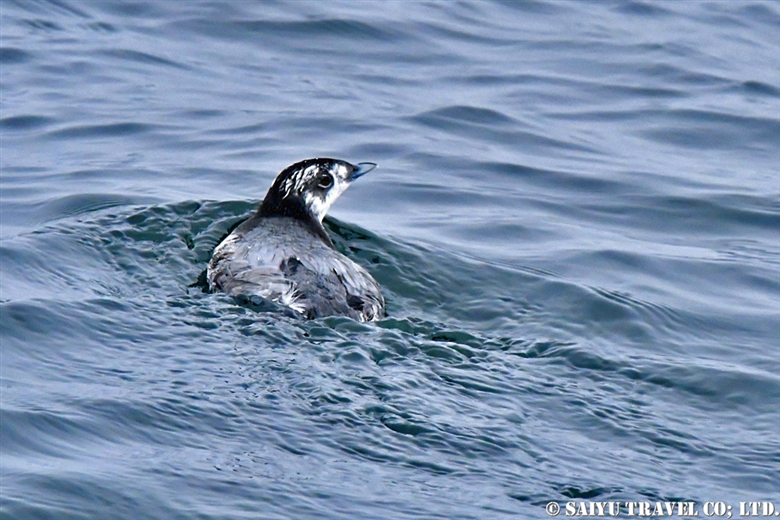
Japanese Murrelet
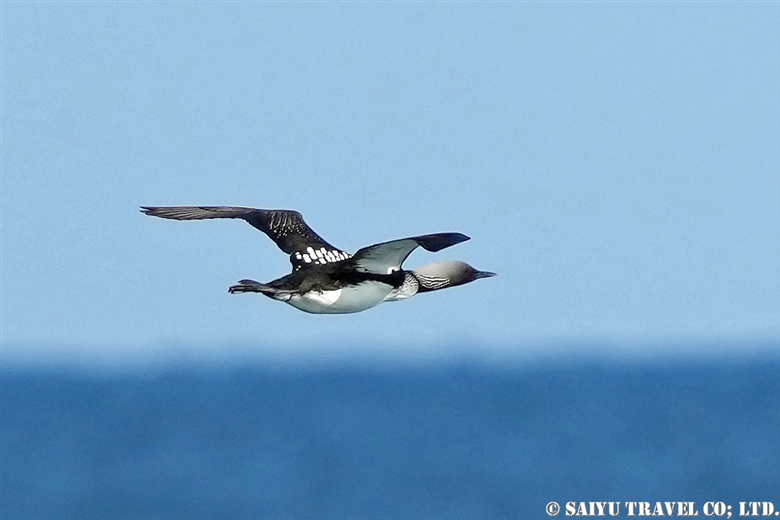
Pacific Loon
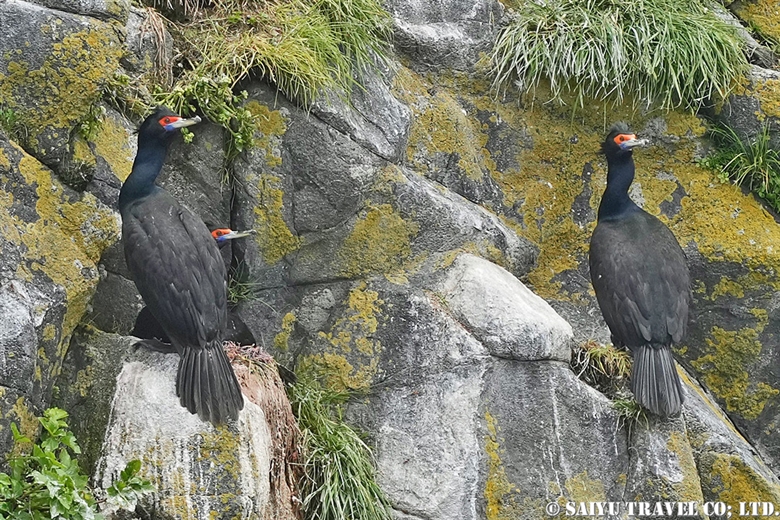
Red-faced Cormorant
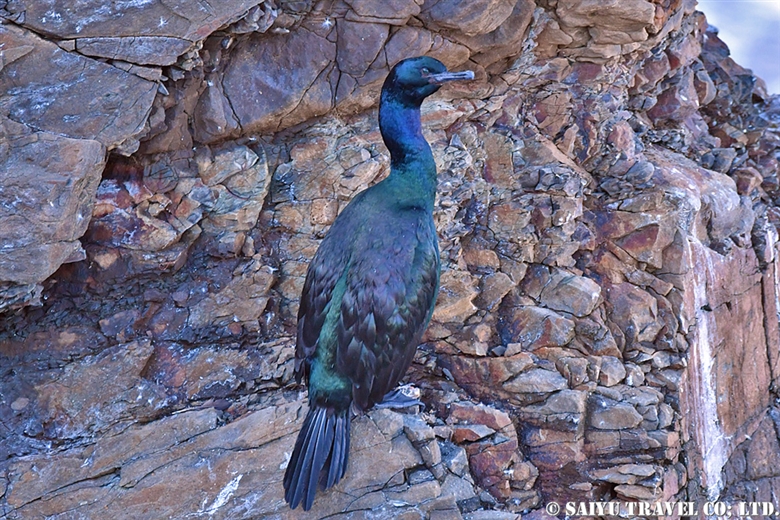
Pelagic Cormorant
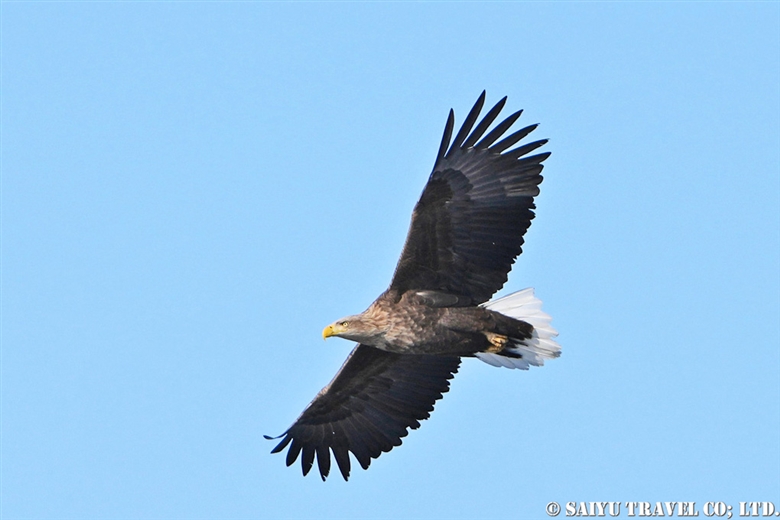
White-tailed Sea Eagle
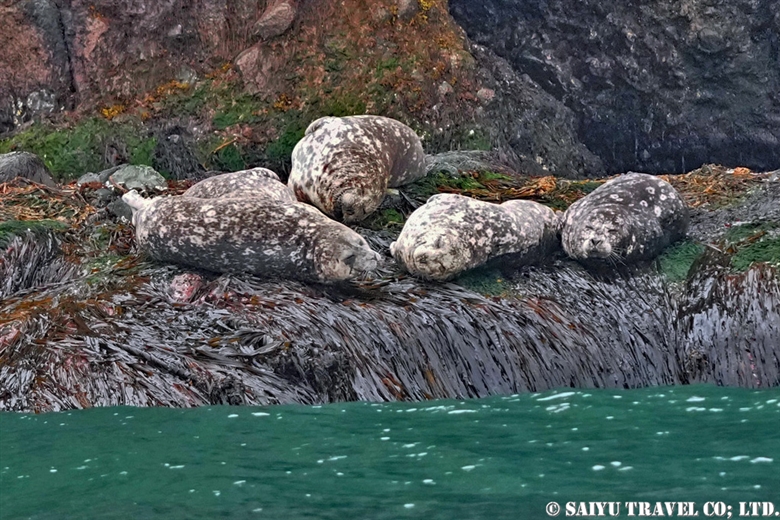
Harbor Seal
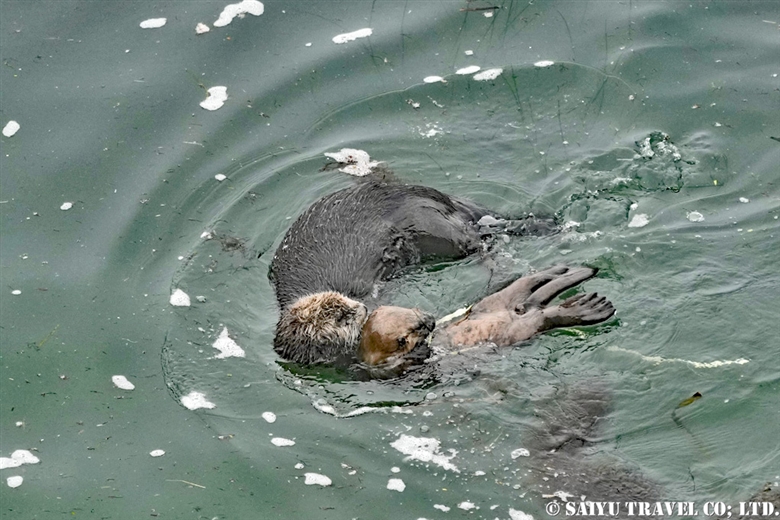
Sea Otter


Cape Kiritappu and the Surrounding Wetlands

Cape Kiritappu is a breeding ground for sea otters and many seabirds can be seen here. If you are lucky, you may see tufted puffins and harbor seals. Since this area is accessible by car, it can be an alternative destination in case the Ochiishi cruise is cancelled due to bad weather or lack of passengers.

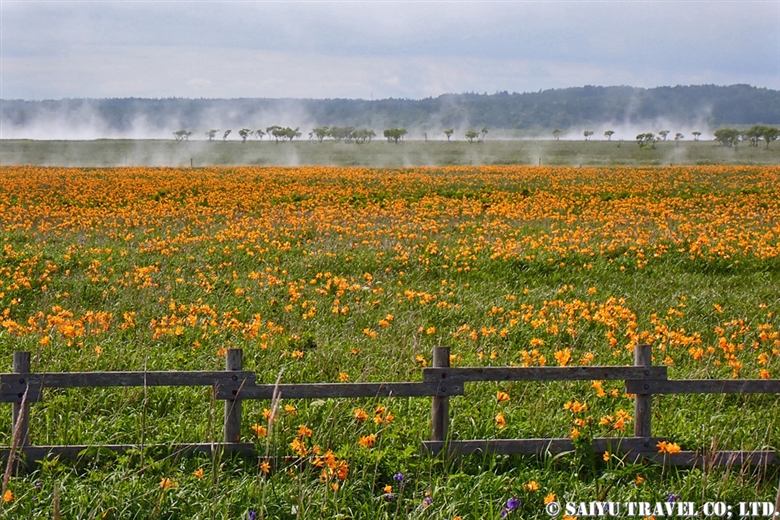
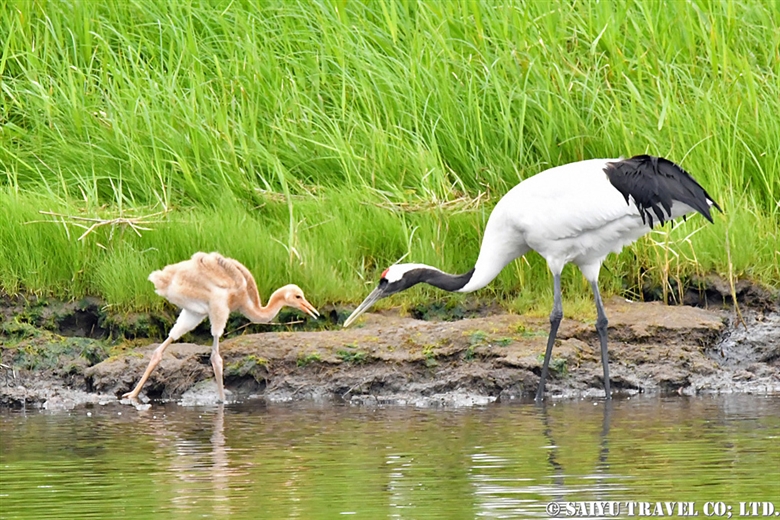
In the Cape Kiritappu wetlands near Cape Kiritappu, large colonies of daylily, hare’s-tail cottongrass, and other grasses and flowers can be seen, as well as many birds that prefer the grasslands. In addition, along the road to Ochiishi, there are several small wetlands and grasslands suitable for flower and bird watching. Here you can also expect to see red-crowned cranes with their chicks.

Below are some of the birds and flowers that can be seen in the wetlands. Please refer to the seabirds at Cape Kiritappu, as they are similar to those on the Ochiishi cruise mentioned above.

Kiritappu Wetland(Hokkaido Daylilies)
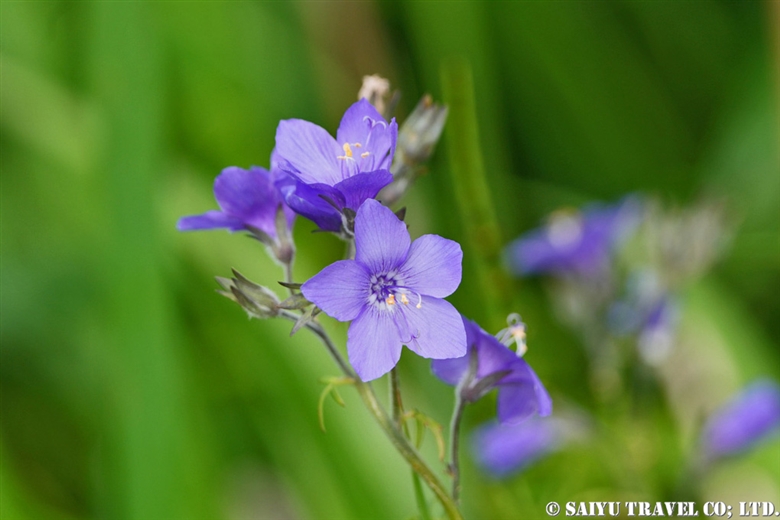
Kushiro Jacobs Ladder
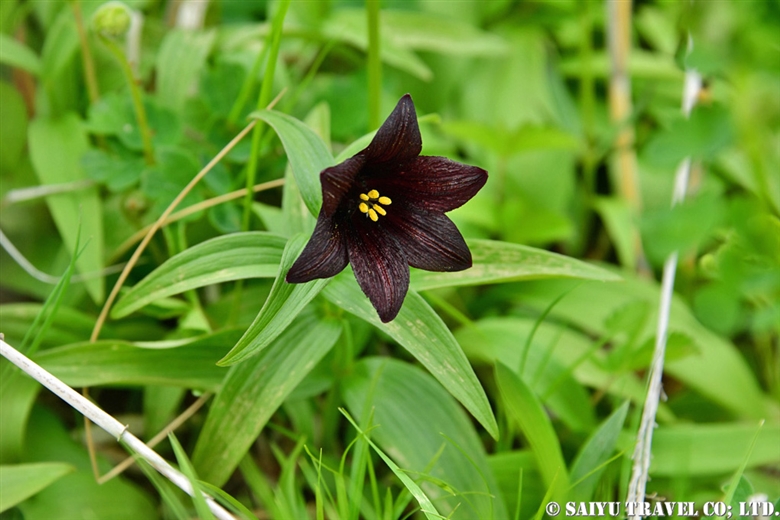
Black Lily
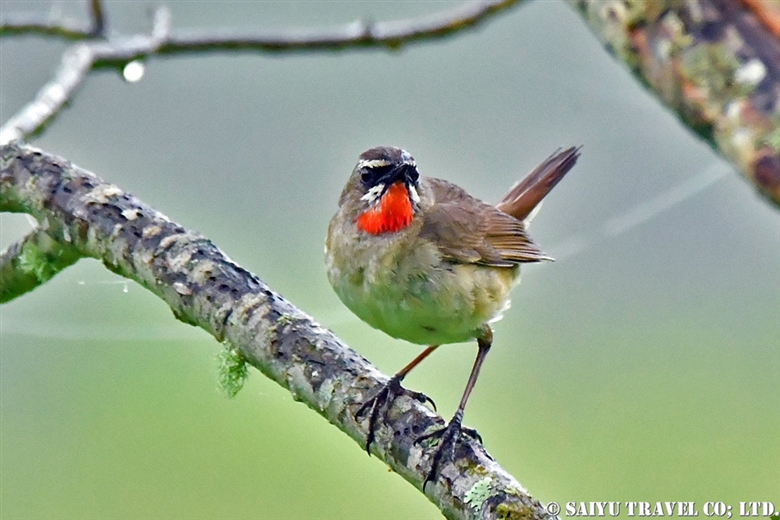
Siberian Rubythroat
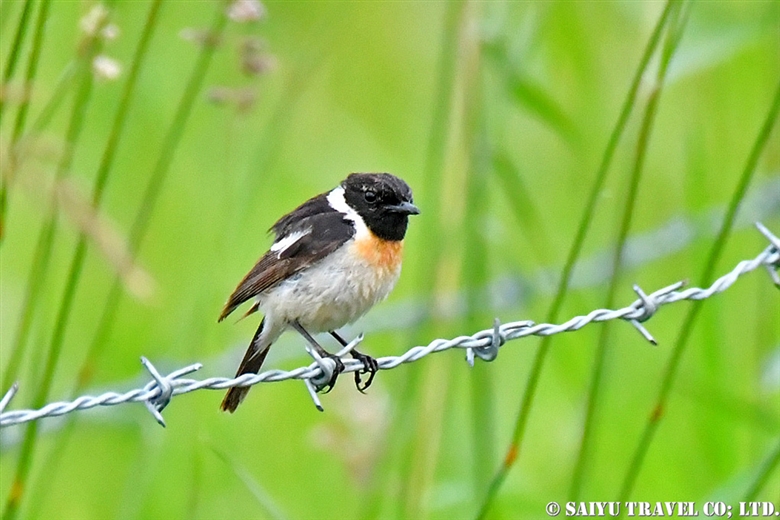
Amur Stonechat
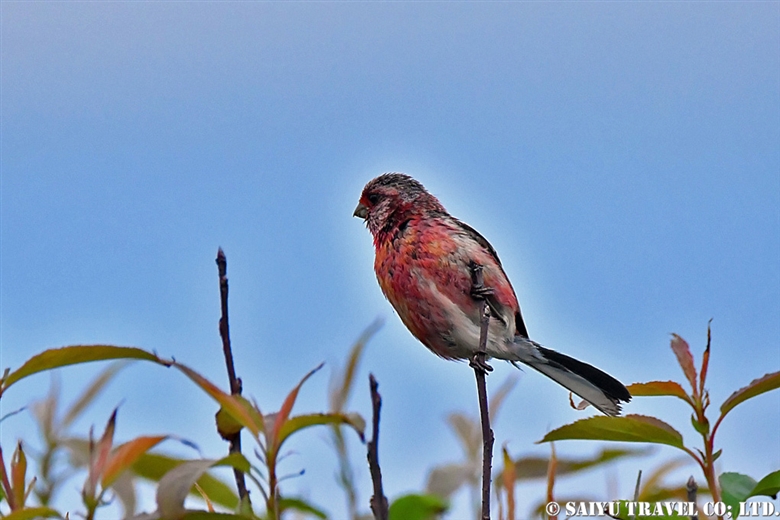
Long-tailed Rosefinch
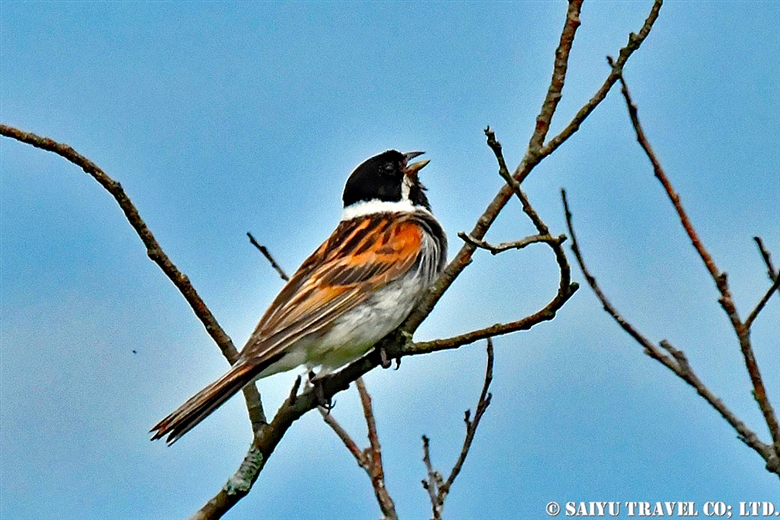
Reed_Bunting
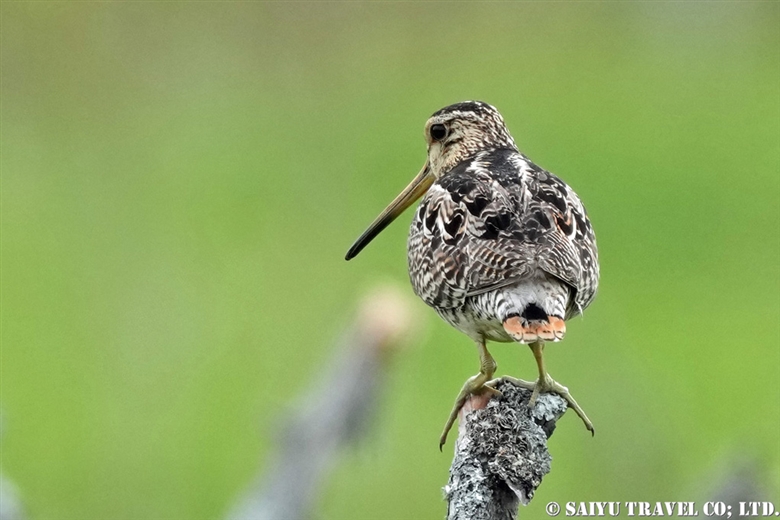
Latham’s Snipe
Red-crowned Crane
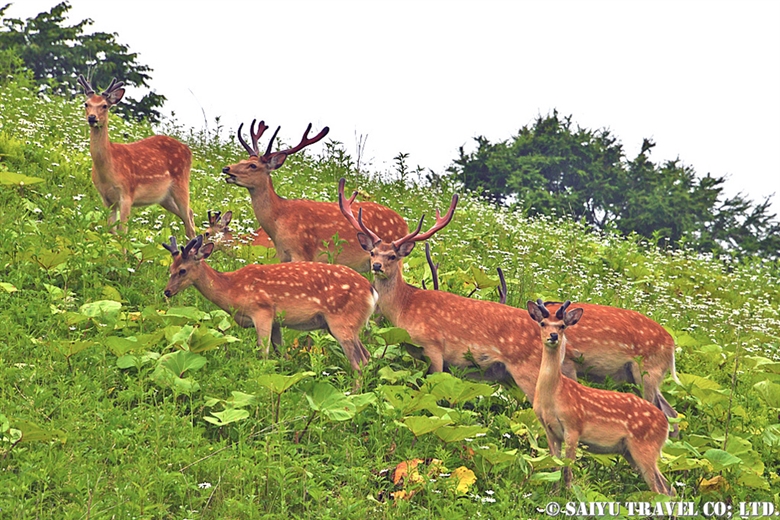
Ezo Sika Deer


Photo & text : Hiromichi HAYASHI

Observation : Ochiishi & Kiritappu, Nemuro, Hokkaido

*Contact  us, Saiyu Travel for more information about wildlife and bird watching in Hokkaido. We can make various arrangements for your trip. We operate a guesthouse, Shiretoko Serai, in Rausu, Shiretoko and Teuri Island. both are perfect location for wildlife lover.

*Youtube : Wildlife of Japan
Tags: , , , , , , , , , , , , , , , , , ,

Shakotan’s Undersea Columnar Joints and Hokkaido’s Marine Life

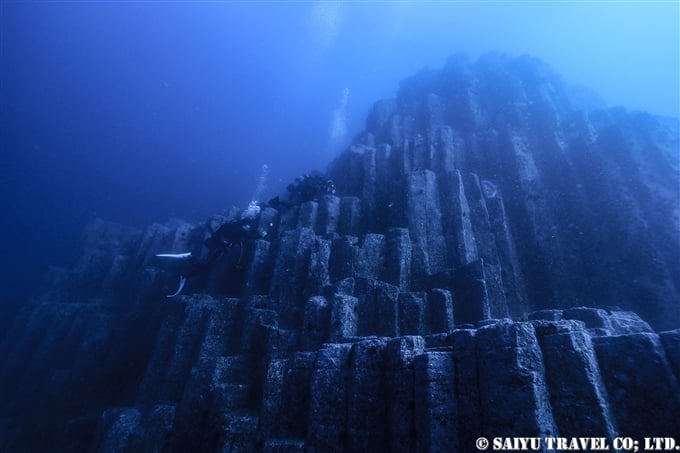
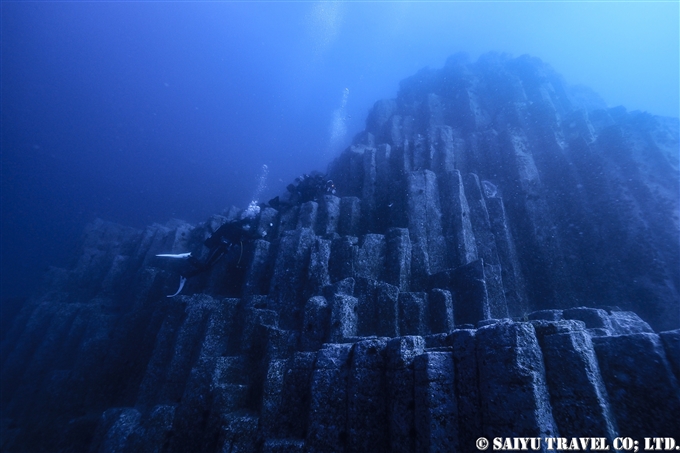
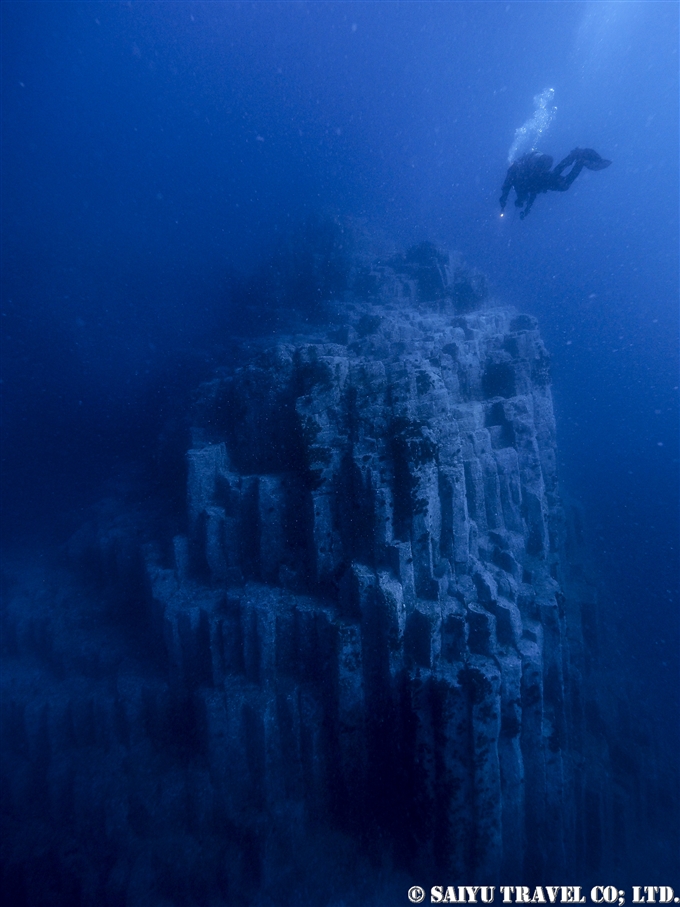
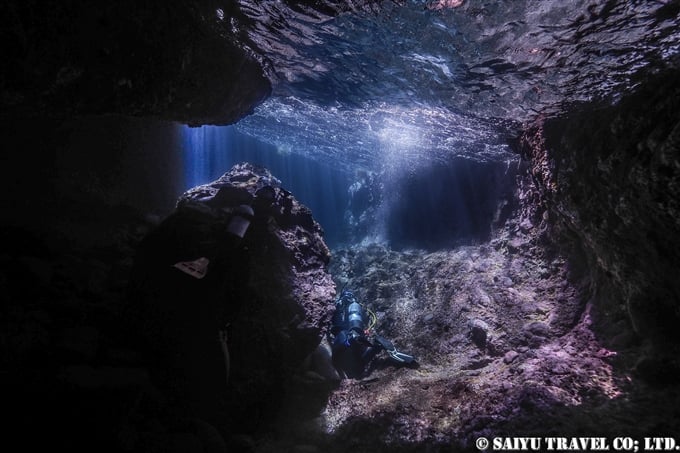
By car from Sapporo, the Shakotan Sea is 1 hour and 30 minutes by car. The scenic spot called the “Shakotan Blue” is famous for the high transparency of the water. The columnar joint formations look like underwater ruins, which are very famous.

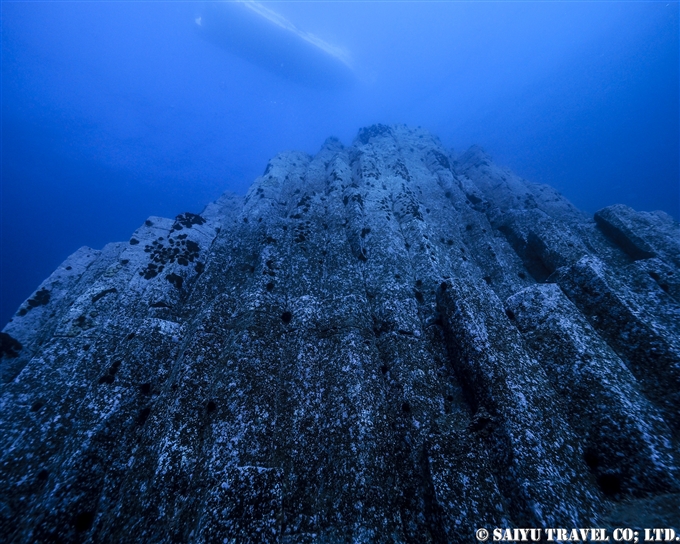
Columnar formations are polygonal columnar fissures caused by volumetric contraction as the magma solidifies and then cools. It is a manifestation of the Pacific “Ring of Fire,” also known as the “volcanic archipelago.”

Looking up at the sea’s surface from the columnar joints.

This point of the columnar joint is called the “hidden root of Biyano.” The depth here is about 25 meters, and it is too bad that it’s barely visible from the glass bottom boat.

Heading towards the sites along the coastline. Diving the strait was blessed with good weather. When I visited in September, there wasn’t much marine life to see then…but I was able to see wonderful “Hokkaido’s sea creatures on the Sea of Japan side” with wonderful guides.
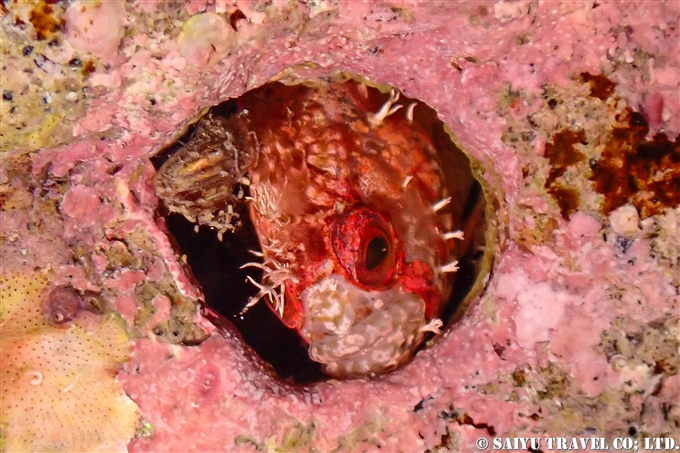
Ishikawa Sculpin Furcina ishikawae

Nijikajika Alcichthys elongatus

Pietsch Sculpin (Himefutasjikajika) Icelinus pietschi

Akiginpo Chirolophis saitone

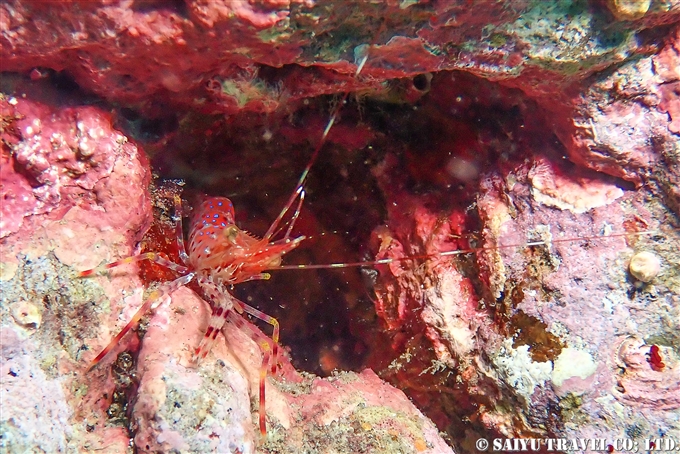
Far Eastern Shrimp Pandalus prensor Stimpson. Beautiful blue speckles. If eating it raw, it tastes like sweet pink shrimp.

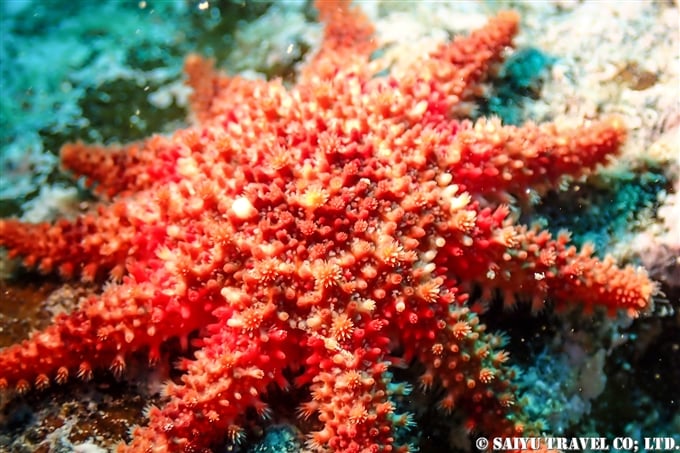
Common Sunstar Crossaster papposus. There are many legs, just like sunrays.

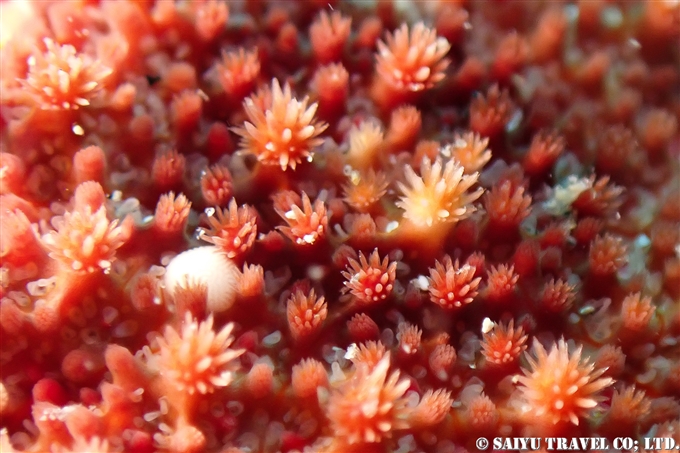
When you take a macro shot, it looks like a flower garden.

The coastal area’s rock walls which are carved by the waves, are a treasure trove for macro photography.

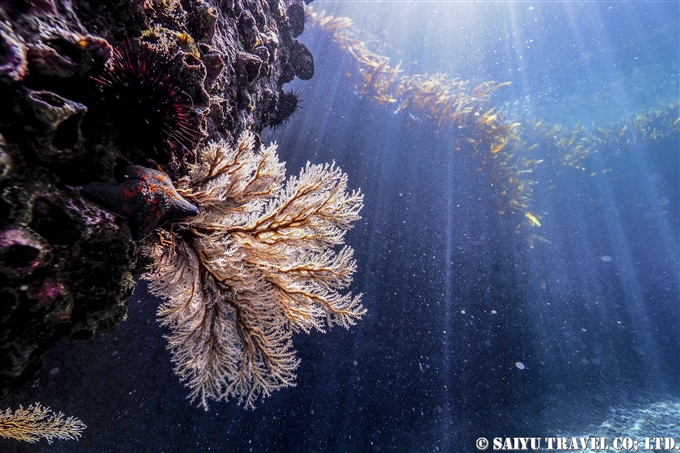
The kelp was a bit wilted, but the coral and kelp were beautiful.

Unfortunately, I could not eat the sea urchin because fishing was prohibited from August 31st. I decided to revisit Shakotan again in the future.
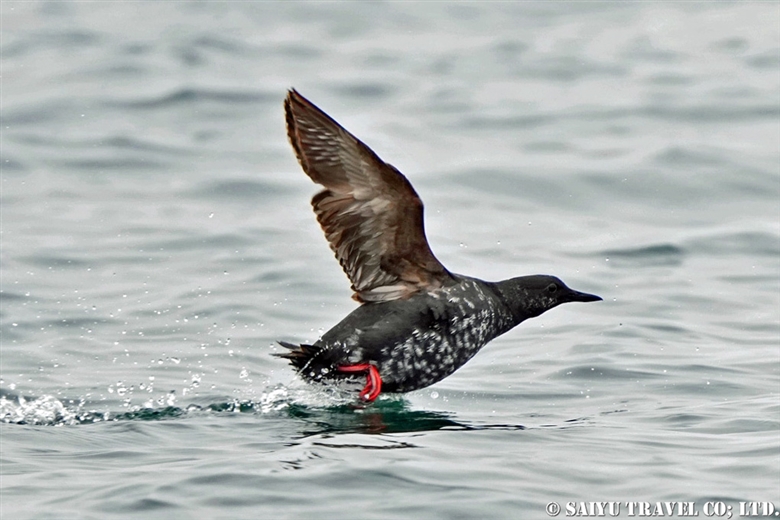
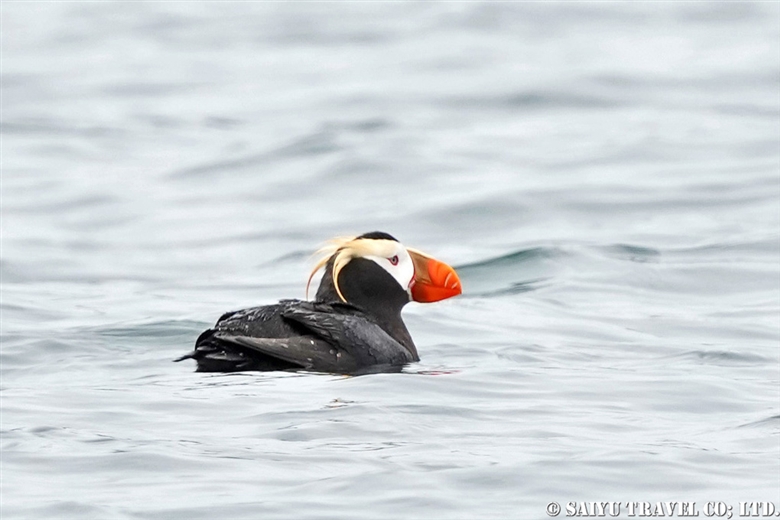
Image & Text: Mariko SAWADA
Observation: Sep 2022、Shakotan, Hokkaido

*Contact  us, Saiyu Travel for more information about wildlife and bird watching in Hokkaido. We can make various arrangements for your trip. We have a guesthouse, Shiretoko Serai, in Rausu, Shiretoko Peninsula.

Tags: , , , , , , , , , ,

From Japanese Bullhead Sharks to Dragon Moray Eels! Diving in Isu Oshima

At the start of July, we were in the waters around Izu Oshima. We could see Bullhead sharks, Dragon Moray Eels, and Hammerheads…We were there only for 2 days and one night but its only 1.5 hours away using the high-speed boat from Takeshiba Pier in Tokyo.

After we arrived in the early morning at the island, we had 3 dives, then the next morning grabbing another 3 dives, including being able to see the Hammerhead shark with sunrise, by the time we were back on the boat for going back, we had an 6 amazing dives under our belts! Isu Oshima is simply awesome.

Sea of Izu Oshima・The Undersea Geopark(1)

Sea of Izu Oshima・The Undersea Geopark(2)

Youtube : Dive in Izu Oshima

I was quite worried about the heat during the day, but the water temperature was 19 to 22 degrees ℃ which was fine in a dry suit. While taking a diving short course, we could observe so many fish, and on top of that, get some photos as well. The most memorable thing about the trip was our encounter with the Bullhead sharks.

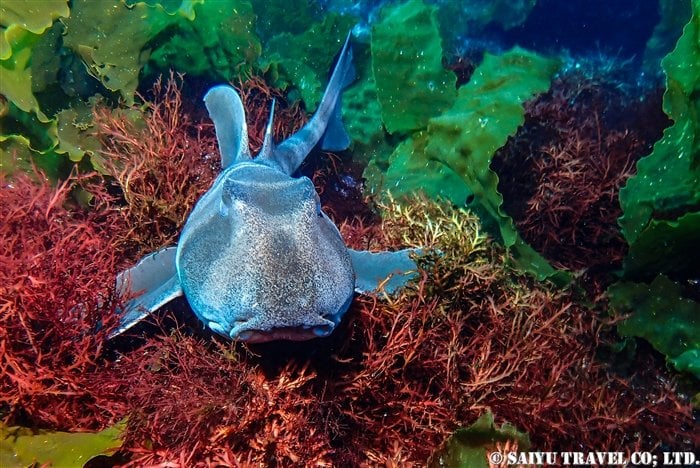
The Bullheads are quiet-natured sharks, who often live in the seaweed beds. They are commonly seen in Izu while diving. The English name is ‘Bullhead Shark’ but the Japanese name of the sharks are “Neko-zame” which means “Cat (neko) + Shark (same).” It is named this because where the eyes of the shark are pointy like a cat’s ears at the top of the head, the overall shape makes the shark look like a cat’s face.

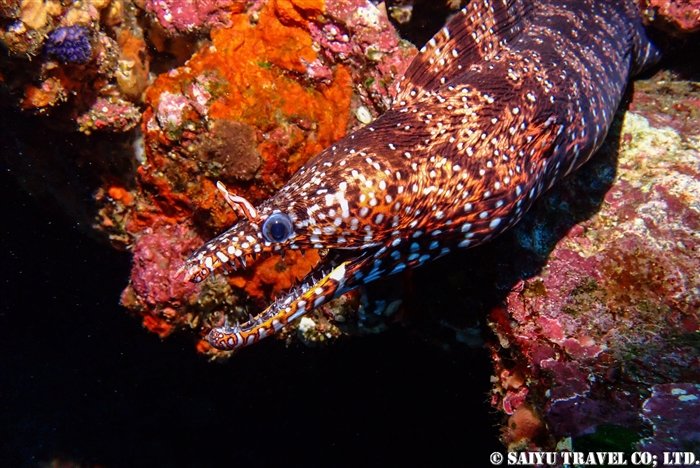
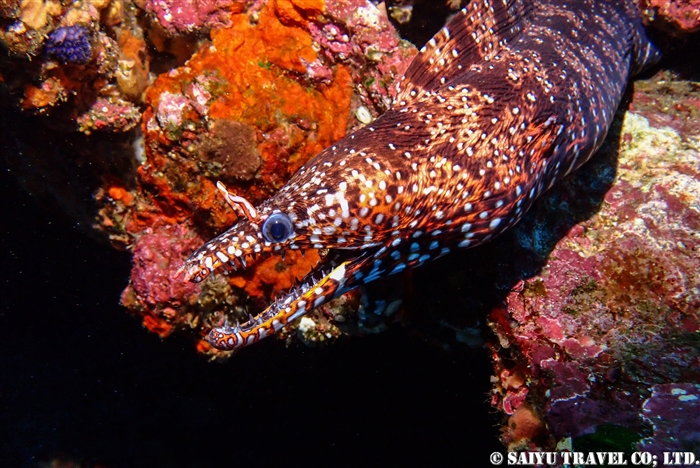
トラウツボ Doragon Moray 伊豆大島 Izu-oshima

The Dragon Moray Eel.

The English name was ‘Dragon Moray’ but the Japanese named it as ‘Torautsubo’ or a ‘Tiger’ (tora) +’Moray’ (utsubo).

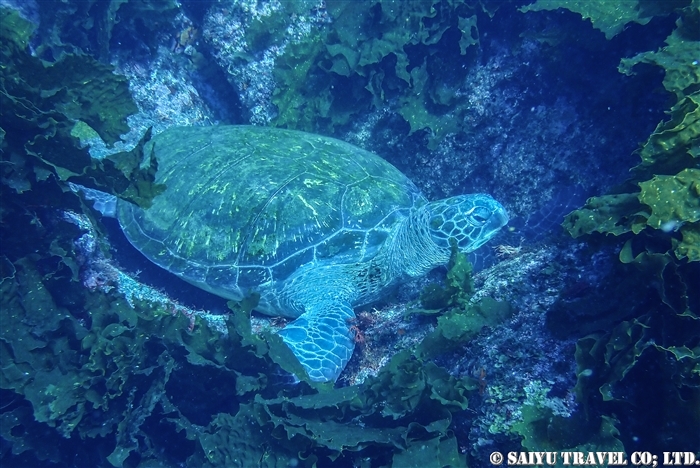
This Green Sea Turtle has been given a name by the locals as ‘The Lord’ (Nushi) because it is so extremely large. Because it is not photographed with a person, it is hard to get the scale of just how big he is, but in all the diving I have done, it is the largest Green that I have ever seen. According to our guide, either he is getting too old or too big, but he just does not move very much from this spot.

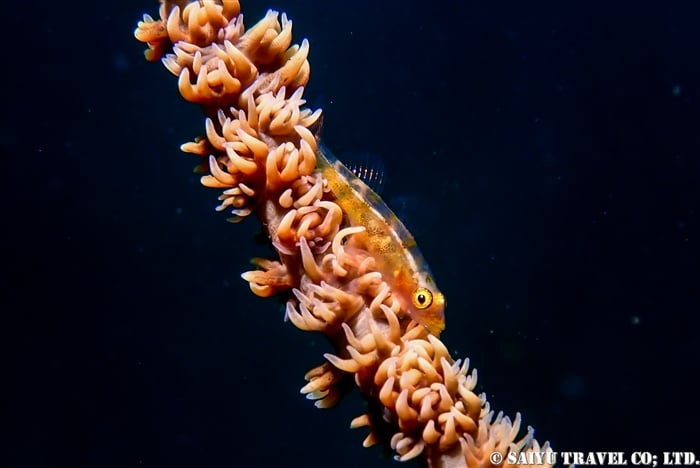
Whip Coral Goby

This type of coral is called a Whip Coral and the fish that lives on it is a type of Goby fish.

In Japanese this fish is called a ‘Toshima Gimpo’ (Neoclinus toshimaensis). It is poking its head out of its burrow but only 1cm of it can be seen.

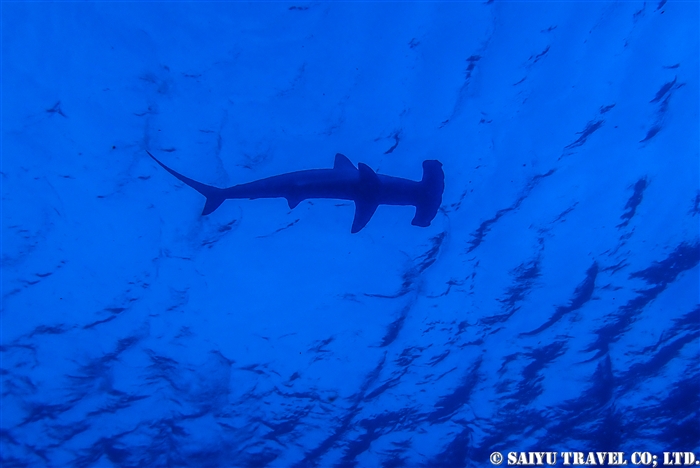
A Hammerhead shark at Keikai Beach. During this trip, we did not see that many of them, but it is always a little startling to see them swimming (we were at 12 meters depth as they passed directly overhead).

ツバメの巣立ち

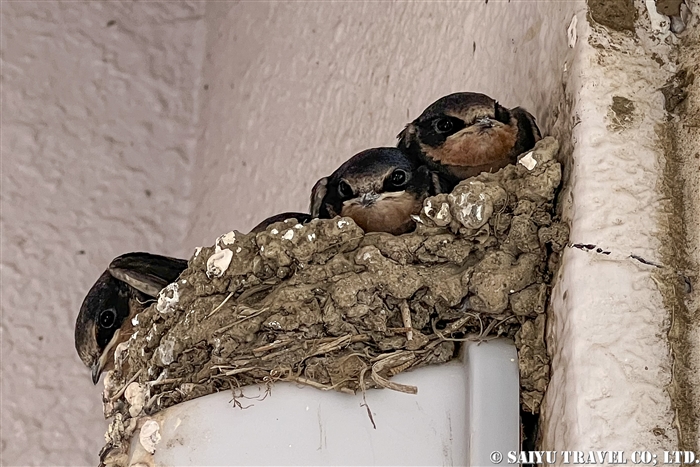
Near the access to our diving area, there is a toilet which served as the home for this Pacific Swift nest- it was full. The next day, the babies had fledged and left the nest.

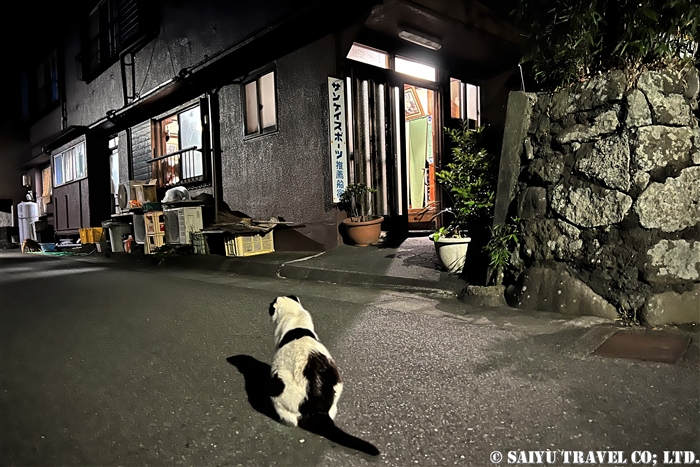
This is the outside of the lodging. There are many cats in this area. It was a very healing stay with nostalgic scenes like this and the friendly cats.

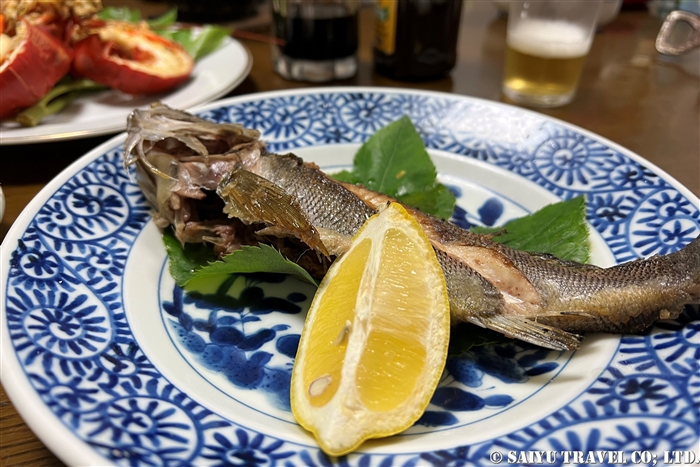
The fish we saw the most during this trip was the Chicken grunt (isaki). We also saw it on the menu at dinnertime!

If you are in Izu Oshima, you should try the bekko rice bowl (Bekkou don). We ate it as our last meal after the final dive, enjoying all the specialty items the island has to offer. There is a pickled sashimi that is placed on top of the sushi rice. And the beer after having a dive tastes so good.

In the evening, we took the ferry back to Takeshiba pier in Tokyo.

Image: Mariko SAWADA
Observation: JUL 2022, IZU OSHIMA
Special Thanks: Beach Line

Related topic       Youtube : Dive in Izu Oshima

Tags: , , , , , , , ,